
Hi. We’re Northeast Label.
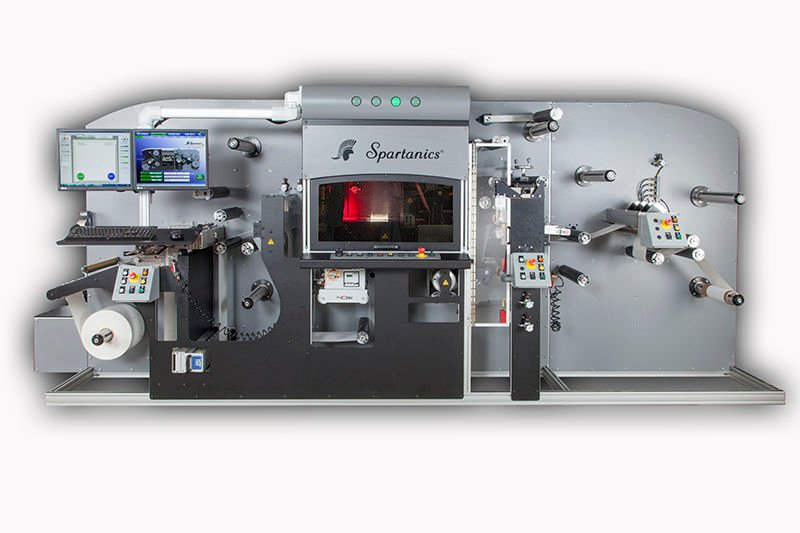
We bought a Spartanics machine.
Now we own the world’s most expensive industrial decoration.
It doesn’t cut.
It doesn’t run.
It just sits there, like a monument to bad decisions and worse customer support.
If you want the short version:
We paid serious money for a Spartanics system and ended up with a broken machine and no meaningful support. If you’re considering buying from them, let our disaster be your warning label.
How We Got Here: Step 1, Buy Machine. Step 2, Regret.
Buying a piece of capital equipment is supposed to be a grown-up, professional process. You don’t impulse-buy a laser finishing line after seeing an Instagram ad between cat memes. You do your research. You talk to reps. You look at samples. You plan ROI, throughput, uptime.
So we did all that. We made the big decision, signed the paperwork, and paid for a Spartanics machine. This is not a “we bought some pens off Amazon” purchase. This is major investment, the kind that shows up on financial statements and board conversations.
And then we started living the nightmare.
The Machine: From “Production Workhorse” To “Luxury Shelf”
A machine like this is supposed to do one thing: run.
Cut labels. Hit tolerances. Stay in spec. Make us money.
Instead? Issues. Constant issues. Then more issues. Then, finally, full-on “this thing is down and staying down” territory.
You know what’s worse than having a machine go down?
Having a machine go down and realizing the manufacturer’s support is basically a rumor.
We didn’t buy a vintage car at an estate sale. We bought a modern industrial system from a company that markets itself as a serious player in this space. Support should be baked into that.
Spartanics Support: Schrödinger’s Service Department
Here’s what it feels like dealing with Spartanics support:
- You send an email.
- Time passes.
- You send another email.
- Maybe you get a short reply, maybe you don’t.
- Actual resolution? Good luck.
We’re not asking them to personally hand-feed the machine artisanal lubricant by candlelight. We just want a system we paid a fortune for to work, and when it doesn’t, we want a vendor that acts like they care that it’s broken.
Instead, we’ve been left with a machine that might as well have “AS-IS, NO RETURNS” spray-painted on the side.
When your “high-end, production-grade system” is functionally indistinguishable from a giant, powered-off box in the corner, something has gone very, very wrong.
The Result: A Non-Functioning Paperweight
Let’s be clear about the outcome here, from our perspective:
- This machine does not do the job it’s supposed to do.
- We have not received the support we reasonably expected to get it there.
- Operationally, it is a paperweight—a very large, very expensive reminder of how badly vendor choices can go.
You know what you can’t do with a broken Spartanics machine?
- You can’t ship jobs.
- You can’t keep promises to your customers.
- You can’t hit the throughput numbers that justified buying it in the first place.
But hey, at least it looks impressive while not working. Maybe we’ll start selling tours. “Come see the Monument to Vendor Neglect: now with LEDs.”
The Hidden Cost: Lost Time, Lost Trust, Lost Opportunities
The price tag on the machine is just the entry fee to this ride.
The real cost is:
- Time wasted chasing down answers that never fully arrive
- Downtime that chainsaws your production schedule
- Staff standing around while you try to figure out whether the next step is another support ticket or an exorcism
- Jobs you can’t take, or can’t confidently deliver, because you don’t know if the machine will behave
This isn’t “oh well, things happen.” This is “we built part of our operational plan around this equipment, and now that plan is on fire.”
“But Maybe You Just Had Bad Luck?”
Could this be a one-off? Sure. In theory.
But we know we’re not the only ones who got dragged through this.
When multiple companies end up saying some version of,
“We spent huge money on a Spartanics system and got a broken machine with little to no real support,”
you start seeing a pattern.
We’re not talking about a fussy sensor or a minor teething issue. We’re talking “machine down, no clear path back to reliable production.” That’s not bad luck. That’s a systemic failure in how a company treats its customers once the check clears.
If You’re Considering Spartanics… Read This Twice
If you’re out there looking at laser finishing systems, here’s what we wish someone had told us before we signed anything:
- You are not just buying hardware.
You are buying a relationship with the company that built it. If that company ghosts you when things go sideways, you don’t have a partner—you have a liability. - Support responsiveness is not a “nice to have.”
It is life or death for your production schedule. When a machine is down, every day matters. Every hour matters. - Ask yourself what happens if your machine becomes “the paperweight.”
Can you absorb that? Do you have backup capacity? Are you ready to spend months chasing a vendor for help?
From where we’re standing, after living this, our recommendation is brutally simple:
Do not put your business in Spartanics’ hands.
We did. We ended up with a broken, non-functioning machine and support so weak it might as well have been optional.
You only get so many chances to make big capital investments. We burned one on this.
You don’t have to.