
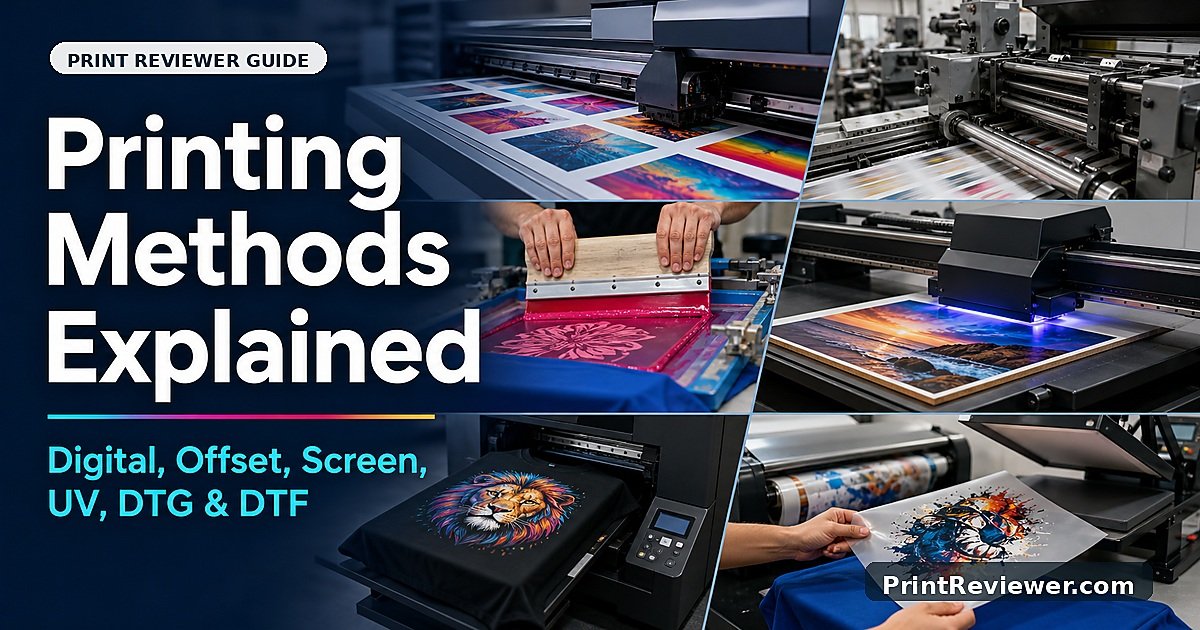
Printing methods explained gets much easier once you stop looking for one perfect process. There is no universal best method. There is just the right process for the job in front of you. If you are printing 5,000 identical brochures, your answer will not be the same as if you are printing twelve personalized shirts, a run of acrylic keychains, or a stack of posters with thick spot-color ink.
That is why printing methods explained should really be about fit.
What material are you printing on?
How many pieces do you need?
Does every piece stay the same, or change?
Do you need soft fabric feel, thick ink laydown, direct-to-object printing, or fast short runs?
Once those questions are on the table, the methods stop fighting each other and start making sense.
Printing Methods Explained Starts With Digital vs Analog
At the broadest level, some methods are digital and some are more traditional analog processes.
Digital printing uses a digital file to drive the output directly. That usually means faster setup changes, easier short runs, and easier personalization.
Analog methods usually involve a more physical setup, like plates, screens, or stencils. That extra setup can be worth it when the method delivers a specific visual result, material compatibility, or efficiency at scale.
That is the big-picture split. Now for the actual methods people keep seeing in the wild.
Digital Printing
Digital printing is the everyday workhorse for a lot of modern commercial print.
The big idea is simple: the press prints from digital image data rather than needing traditional printing plates for each job. That makes digital especially useful when you need quick turnarounds, short runs, versioning, or variable data like unique names, numbers, or codes.
This is why digital printing shows up so often in:
- short-run business cards
- postcards
- booklets
- labels
- direct mail
- customized marketing pieces
If the job changes often, or you do not want to eat a bunch of setup time on every new version, digital is usually attractive.
Digital is not just the cheap-and-fast option anymore either. Modern digital presses can look very good. The real point is flexibility.
Offset Printing
Offset printing is the old-school commercial standard that still matters because it is extremely good at what it does.
In offset, the image transfers from a plate to a rubber blanket and then onto the sheet. That physical plate-based setup is why offset behaves differently from digital. It takes more setup work up front, but once the press is running, it is very strong for long, repeatable runs.
That is why offset still makes sense for jobs like:
- long brochure runs
- catalogs
- magazines
- packaging
- large-volume commercial print
If digital is about flexibility, offset is about efficiency and consistency when you have enough volume to justify the setup.
It is not the right hammer for every nail. But it is still a very good hammer.
Screen Printing
Screen printing is an analog stencil process where ink gets pushed through a mesh screen onto the material.
This is one of the easiest methods to recognize because it often gives a bolder, more physical ink presence than digital alternatives. It is common for apparel, posters, signage, and specialty graphics where you want strong spot colors, good opacity, or a particular tactile look.
Screen printing shines when you want:
- bold ink laydown
- strong spot colors
- specialty inks
- durable graphics on the right substrates
- repeat runs of the same design
It is usually less about one-off personalization and more about repeat production with a distinctive print character.
So if somebody says a print “looks screen printed,” they are often talking about more than color. They mean the whole feel of it.
UV Printing
UV printing is a digital process that uses UV-curable inks.
The key feature is instant curing. The ink is applied, then cured right away with UV lamps. That helps the ink stay crisp on the surface instead of soaking in like conventional absorbent-substrate printing. It also makes UV printing extremely useful for direct-to-object and hard-surface work.
This is where UV gets interesting.
UV printing is a strong fit for:
- acrylic signs
- wood products
- metal items
- glass pieces
- promotional goods
- packaging prototypes
- personalized hard goods
It can also do things people tend to like immediately, such as gloss effects, texture-style effects, and direct printing onto objects that would make other methods grumpy.
If the question is “how do I print directly onto this hard thing,” UV is often part of the answer.
DTG Printing
DTG means direct-to-garment.
It is basically digital inkjet printing for finished garments. The design prints directly onto the shirt or other soft good instead of first being turned into a transfer.
DTG is especially good when you want:
- full-color garment graphics
- short runs
- on-demand apparel
- detailed designs
- a softer printed feel on the right fabric setup
This is why DTG is popular with small-batch merch, online apparel stores, test runs, and custom jobs where every order may be different.
DTG is not trying to be all things. It is very specifically good at direct printing onto garments, especially when customization and small runs matter more than brute-force repetition.
DTF Printing
DTF means direct-to-film.
Instead of printing directly onto the garment, the design is printed onto a special film, adhesive powder is applied, and then the image is transferred to the garment with heat.
That extra step is the whole point.
DTF is useful when you want the flexibility of a transfer workflow and broader material compatibility than a direct-only garment process. It is often attractive for decorated apparel programs that need to hit a wider mix of items, fabrics, or shapes.
In plain English, DTF makes a lot of sense when:
- you want transfer-based production
- you need broader garment flexibility
- you want to decorate more than one item type from the same printed transfer flow
- you are producing custom apparel on demand
If DTG is “print right onto the shirt,” DTF is “print onto film, then transfer onto the item.”
That distinction matters a lot.
Which Method Fits Which Kind of Job
Here is the practical version.
Use Digital Printing When
You need short runs, fast updates, personalization, or jobs that change often.
Use Offset Printing When
You have longer, repeatable commercial runs where the setup investment pays off.
Use Screen Printing When
You want bold spot-color graphics, strong ink laydown, or a classic print look on apparel, posters, or similar products.
Use UV Printing When
You need direct-to-object printing or hard-surface customization on materials like acrylic, wood, metal, glass, or promotional goods.
Use DTG When
You want detailed full-color printing directly onto garments, especially for short-run or on-demand apparel.
Use DTF When
You want transfer-based garment decoration with broader application flexibility across different apparel types or shaped items.
Common Mix-Ups
One common mistake is treating DTG and DTF like the same thing. They are not.
Another is assuming digital printing and UV printing are separate universes. UV is digital too. It just uses UV-curable inks and often serves different substrates and product types.
Another is assuming screen printing is automatically old and digital is automatically better. That is not how this works. Some jobs genuinely look better or make more sense in screen print. Others very clearly belong in digital.
And another is assuming offset is outdated. Offset is still relevant because long-run commercial printing has not vanished just because people learned to say “on-demand.”
Final Verdict
Printing methods explained really comes down to this:
Digital is flexible.
Offset is strong at scale.
Screen printing is bold and physical.
UV is the direct-to-object specialist.
DTG is direct-to-garment.
DTF is film-transfer garment decoration.
If you remember those six ideas, you will already be doing better than a lot of print product pages that somehow manage to explain none of them clearly.
The best method is not the fanciest one.
It is the one that matches the material, the run length, the level of customization, and the result you actually want.