
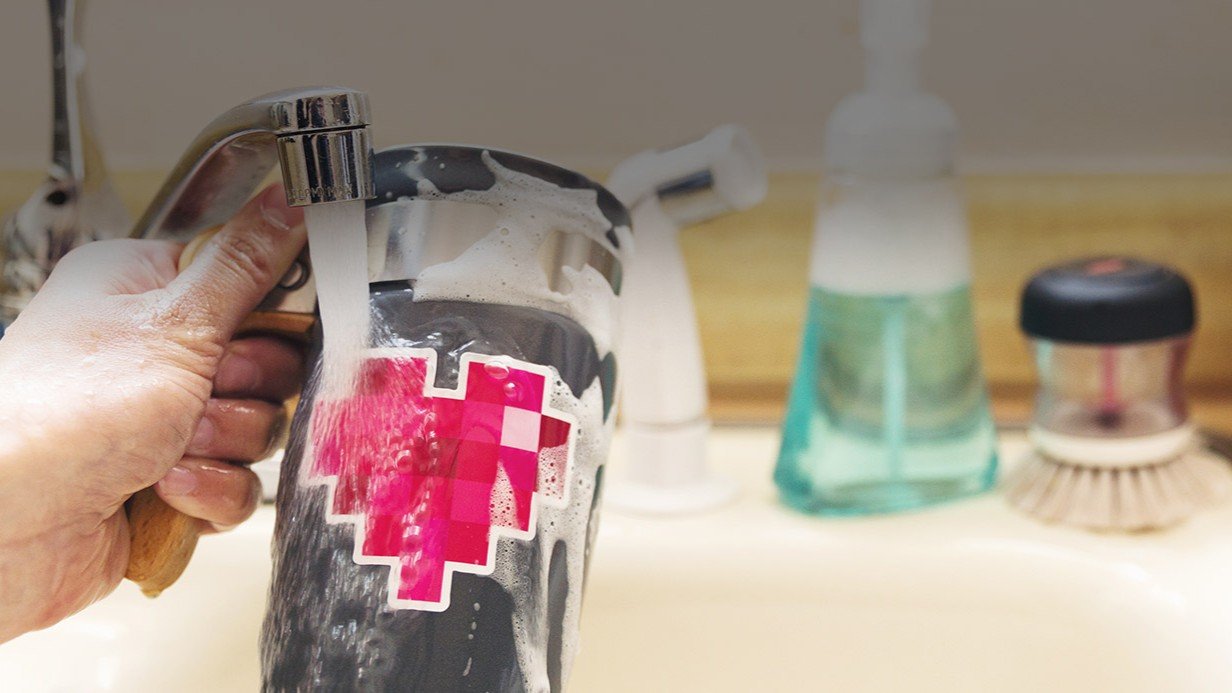
If you’ve ever stared at a product page and thought, “Cool, but what does that actually mean,” you’re not alone. The phrase waterproof vs weatherproof stickers gets thrown around like it’s a standardized rating system. It isn’t. These are mostly marketing words that only become meaningful once you know what materials, inks, and laminates are doing the real work.
Here’s the practical translation, with the gotchas nobody puts in big text.
First: these aren’t regulated sticker terms
For stickers and labels, there’s no universal, consumer-facing rule that says what “waterproof” must mean. Some companies test. Some… vibe. Your job as a buyer is to look past the word and find the proof: material, laminate, adhesive, and any stated test method or durability rating.
Waterproof stickers
What “waterproof” usually means
A waterproof sticker is generally expected to handle:
- Rain
- Splashes
- Condensation on bottles
- Hand washing
- Brief soaking
Most of the time, “waterproof” is about two things:
- The face material doesn’t absorb water (vinyl, polyester, BOPP/polypropylene film)
- The print won’t run when wet (often achieved by the ink system, plus a laminate)
What “waterproof” does NOT promise
- UV resistance (sun fading)
- Heat resistance (hot water, heated dry cycles, car dashboards in summer)
- Abrasion resistance (keys in a pocket, cooler rub, scrubby sponges)
- Edge survival (a sticker can be waterproof but still lift at the edges)
Common “waterproof” failure modes
- The print looks fine, but the edges lift after repeated wetting and drying
- The sticker stays stuck, but the surface gets scratched or cloudy without a protective laminate
- The adhesive sticks great to glass, but fails on low surface energy plastics (some bottles and storage containers are sneaky like that)
Weatherproof stickers
What “weatherproof” usually means
Weatherproof is basically “outdoor capable.” It implies resistance to:
- Sunlight (UV)
- Rain and humidity
- Temperature swings (hot days, cold nights)
- Sometimes ozone and general environmental aging
If a shop is serious about “weatherproof,” you’ll usually see clues like:
- “Outdoor rated” durability (months or years)
- “UV resistant laminate”
- “Laminated vinyl” or “polyester film”
- Mentions of accelerated weathering tests (for industrial materials, you’ll see standards like ASTM/ISO referenced)
Why UV is the main villain
Water is annoying. Sun is relentless. UV breaks down inks and materials over time, leading to fading, cracking, and that sad “it used to be bright” look.
This is why a lot of genuinely weatherproof constructions involve a laminate or overlaminating film designed to protect the printed surface from UV and abrasion.
Common “weatherproof” failure modes
- Fading within weeks or months in direct sun (especially reds and some bright tones)
- Brittleness or cracking after exposure and temperature cycling
- Adhesive failure on textured, powder-coated, or low-energy surfaces outdoors
Dishwasher safe stickers
Dishwasher safe is where sticker claims go to die.
What “dishwasher safe” should mean
At minimum, it suggests the sticker can survive repeated dishwasher cycles without:
- peeling
- bubbling
- losing legibility
- turning into a floating little regret
But here’s the catch: “dishwasher safe” is only meaningful if the seller tells you what they tested:
- How many cycles?
- Top rack only or anywhere?
- Heated dry on or off?
- What surface (glass vs stainless vs plastic)?
Why dishwashers are harsher than “water”
Dishwashers combine:
- Heat (including high-temp and sanitizing modes on some machines)
- Detergent chemistry (strong cleaning agents)
- Pressure and abrasion (spray, movement, contact with other items)
- Repeated cycling (the cumulative effect is what kills most stickers)
A sticker that’s fine in rain can still fail in a dishwasher because the adhesive softens, the laminate edges start to lift, or the print layer gets worn.
Practical expectations
- “Dishwasher safe” is best treated like “survives some number of cycles,” not “immortal.”
- If the listing doesn’t specify test conditions, assume it’s more like “should be okay sometimes” than “commercial kitchen approved.”
Common dishwasher failure modes
- Edge lift first, then peeling
- Clouding or micro-scratching on the laminate
- Adhesive creep (looks like the edges are getting gummy or shifting)
- Ink wear on unlaminated prints
The simple translation chart
Here’s the cheat sheet I wish every product page had.
| Claim on the site | What it usually means | What you should ask for |
|---|---|---|
| Waterproof | Won’t smear or fall apart when wet | What material? Laminated? Can it be submerged? |
| Weatherproof | Built for outdoor exposure, mainly UV + moisture | Outdoor life rating? UV laminate? Any test standard? |
| Dishwasher safe | Survives repeated hot wash cycles (conditions matter) | How many cycles? Top rack only? Heated dry? Surface type? |
What actually makes a sticker survive
Forget the buzzword for a second. Durable stickers usually win because of the stack:
1) The face material
- Vinyl (PVC): common for durable decals; good water resistance
- Polyester (PET): very stable, often used for industrial labels
- BOPP / polypropylene film: popular for labels because it’s moisture resistant
- Paper: can be coated to resist water, but it’s usually not the “buy it for years” option
2) The print layer (ink system)
Some inks hold up better than others when exposed to water, UV, and abrasion. Many sticker companies rely on the laminate to do most of the heavy lifting anyway, which brings us to the part that actually matters…
3) The laminate (this is the durability multiplier)
A laminate or overlaminate can add:
- scratch resistance
- UV resistance
- better chemical resistance
- better “wipeable” behavior
If you’re buying “weatherproof” and the product page never mentions laminate, treat it like an umbrella made of paper towels.
4) The adhesive (the part everyone forgets)
Adhesive performance depends on:
- surface type (glass vs powder coat vs textured plastic)
- surface energy
- temperature
- moisture exposure
- time to fully bond
This is why the same sticker can be “fine” on a laptop and “mysteriously cursed” on a reusable food container.
Real-world recommendations by use case
Water bottles
- If you want it to last: look for laminated vinyl or laminated film label materials
- Dishwasher: expect reduced life unless the brand explicitly tests for it
- Best practice: hand wash if you care about longevity (yes, i know, nobody wants to hear that)
Outdoor gear, mailboxes, car windows, coolers
- You want weatherproof, not just waterproof
- Look for UV resistance, outdoor life ratings, and a laminate/overlaminate
- Avoid highly textured surfaces unless the adhesive is specifically designed for it
Food containers, jars, and anything that gets washed a lot
- Treat “dishwasher safe” as its own category
- Look for brands that sell labels specifically tested for dishwashers
- Assume “top rack only” is safer unless the seller says otherwise
Quick at-home tests you can do
If you’re testing a new sticker batch (or a new printer), you can learn a lot fast.
Soak test (waterproof reality check)
Stick one to glass or stainless. Let it set. Soak it in water for a while and see if edges lift.
Sun test (weatherproof reality check)
Put one in a sunny window and compare it to the same sticker kept in a drawer after a couple weeks. UV damage shows up faster than people think.
Dishwasher test (dishwasher safe reality check)
Run a stickered cup through a few cycles and watch the edges closely. Edge lift is the early warning sign.
FAQ
Are waterproof stickers always weatherproof?
No. Waterproof vs weatherproof stickers is a real difference. Waterproof can mean “doesn’t hate water.” Weatherproof means “doesn’t hate the outdoors,” which is mostly UV and temperature cycling.
If it’s laminated, is it dishwasher safe?
Not automatically. Lamination helps, but dishwashers add heat and detergent that can still break down adhesives and wear edges over repeated cycles.
What’s the single best phrase to look for on a product page?
If you care about durability, look for some version of: “laminated vinyl” (or a film label + overlaminate) plus an outdoor rating or stated test conditions. If a seller can’t tell you what they tested, the claim is just a claim.