
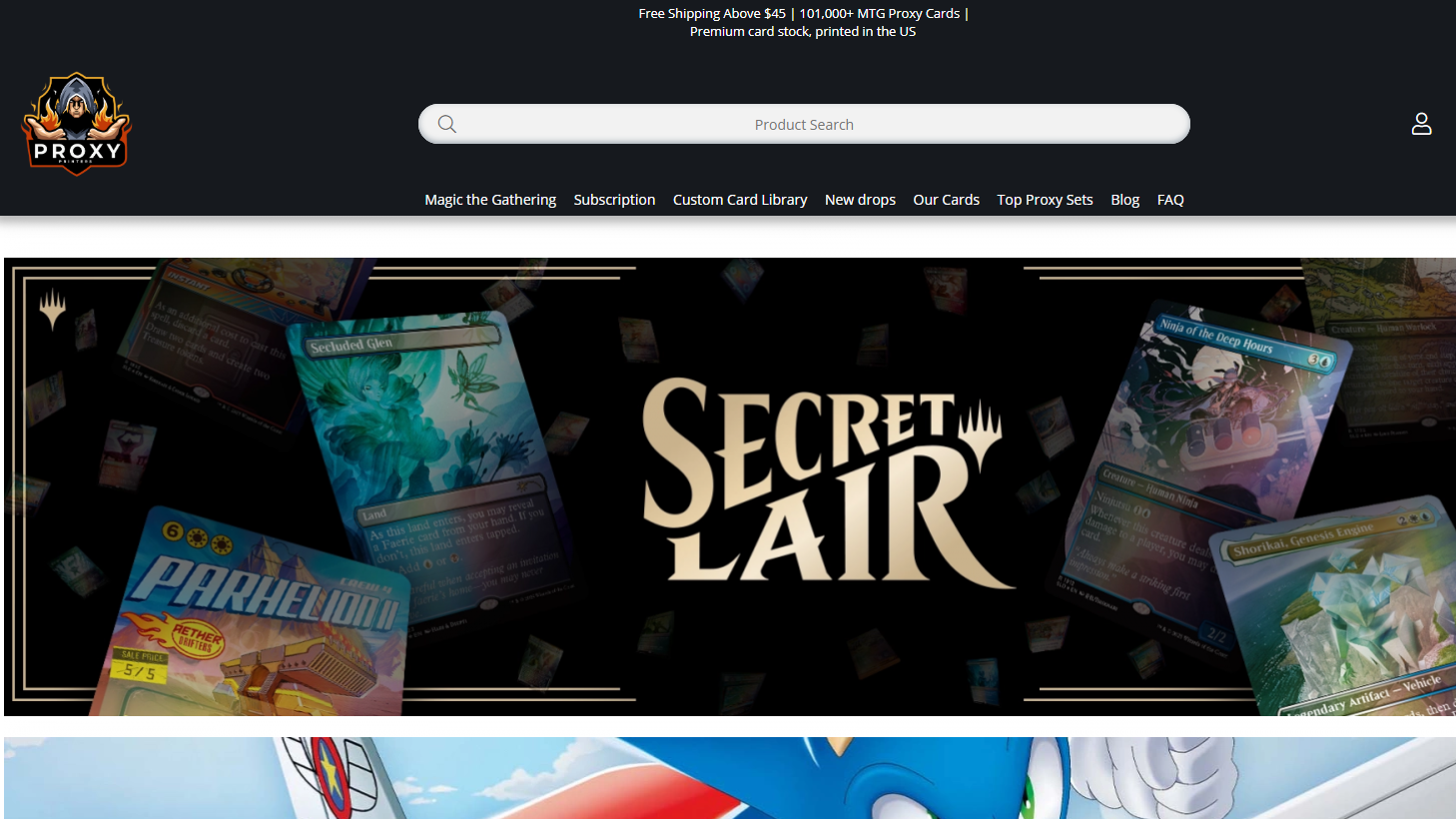
ProxyPrinters positions itself as an on-demand MTG proxy printer, and they’re clear that their cards are not official and not for sanctioned play. They also claim “premium” quality, “blue core” stock that matches real MTG cards, and fast handling out of Los Angeles. They advertise a massive catalog and push a simple flow: search cards, add to cart, check out, done.
On paper, that’s exactly what most people want: find a deck, print a deck, sleeve it up, play.
In reality, our experience did not match the pitch.
ProxyPrinters.com review: Print quality and materials
Print quality is the whole product here. If the cards don’t look clean, feel consistent, and survive basic handling, the rest is just noise.
Our test order result: noticeably low quality
The proxies in our order looked and felt like the output of a workflow that’s either under-controlled or inconsistent. The biggest issue was overall sharpness and clarity. A proxy card can be “obviously a proxy” and still be well-printed. These weren’t.
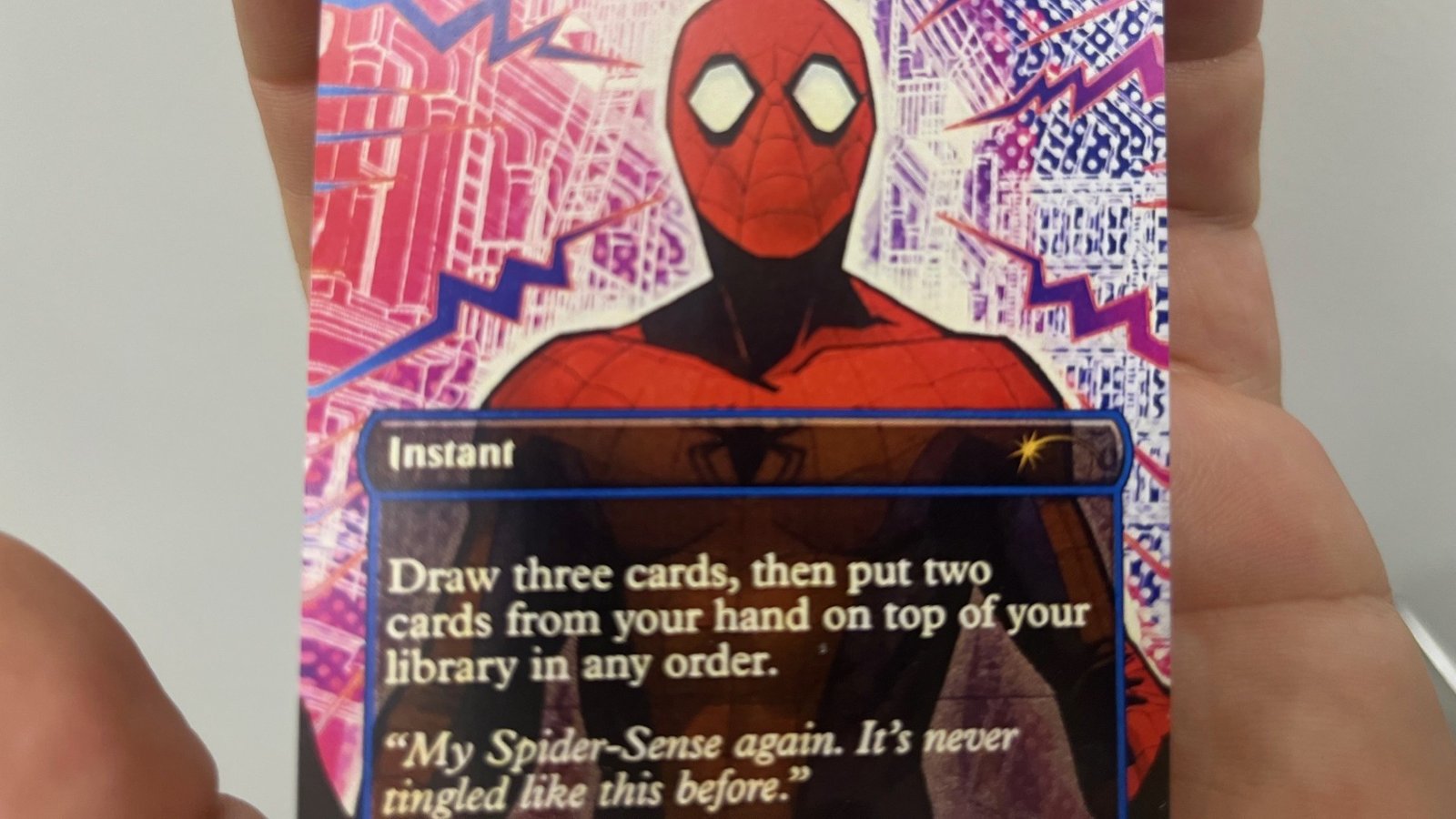
This photo is NOT blurry! It’s the print itself. The text is all blurred and the color is totally off.
Here’s what stood out in hand:
- Soft detail and weak clarity: Fine lines and small text did not hold cleanly. The “crisp card text” standard just wasn’t there.
- Color and contrast felt off: Instead of that clean, readable contrast you want (especially on frames and rules text areas), the cards leaned muddy and flat.
- Finish didn’t help: The surface feel did not add a “premium” impression. Even sleeved, the cards didn’t feel like they were printed with the care you’d expect from a quality-first proxy shop.
If you’re printing a casual deck to play at home, you want the cards to disappear once they’re sleeved. With these, you keep noticing them.
The problem: you can’t “marketing copy” your way out of physical output
ProxyPrinters uses confident language about quality and stock. But print is binary in the way that matters. When you put it next to a strong proxy print, the gap shows immediately: clarity, edge definition, color consistency, and general polish.
And because proxy orders are often big (full decks, cubes, staples packages), inconsistency hurts more. You don’t just get one disappointing card, you get a pile. Bottom line, proxyprinters quality is bad.
ProxyPrinters.com review: Website and ordering experience (buggy and frustrating)
Even if the print quality were solid, the website experience would still be a problem.
“Barely functional” is not an exaggeration
Browsing is the core of their model, but the site feels overloaded and glitchy. It leans hard into “huge catalog” energy, yet it doesn’t behave like a mature storefront.
In practice, we ran into the classic pain points:
- Pages that feel like they’re struggling under the catalog size
- Search and browsing that feels unreliable
- A general sense that the site is one bad refresh away from losing your place
Their own catalog page literally opens with a “Loading [tens of thousands] of proxies” message, which is not the reassuring first impression they probably think it is.
If you’re trying to build a deck quickly, a buggy storefront turns a fun idea into a slow grind.
Why this matters more than it sounds
A rough website doesn’t just waste time. It increases ordering mistakes: wrong versions, wrong quantities, missed cards, duplicate adds, cart issues, and checkout friction. When the product is already inconsistent (based on our result), the last thing you want is extra uncertainty created by the ordering tools.
Price and value
We’re not going to nitpick pennies here, because value is not “cheap” if the cards are not good.
A proxy service can be a good value in two ways:
- You get clean, consistent cards that are easy to play with.
- The ordering process is fast and low stress.
ProxyPrinters did not hit either of those for us. So even if the list price looks attractive, the value equation falls apart once you factor in disappointment risk.
Customer service and reputation signals (mixed)
If a company has mixed quality, customer service becomes the safety net. That’s where the external signals matter.
Trustpilot is not great
At the time of writing, ProxyPrinters sits around the low-to-mid 3 range on Trustpilot, with a small review count. That’s not automatically a death sentence, but it’s absolutely a “slow down and read the recent reviews” situation.
What matters is the pattern: you can see both praise and sharp criticism, including complaints around communication and order issues.
Community chatter is also mixed
Looking around community discussions, you’ll find the usual split: some people report receiving something usable, others warn about quality inconsistency and better alternatives. That inconsistency lines up with what we experienced: it’s not that “nothing shows up,” it’s that what shows up is not reliably good.
Turnaround and shipping reliability
ProxyPrinters claims fast handling and implies quick fulfillment. But third-party complaints include delays and communication problems. That combination is the nightmare pairing for any print business:
- If an order is late, you need clear updates.
- If print quality is off, you need quick resolution.
When reviews suggest both are shaky at times, it’s hard to justify rolling the dice.
Best for
This is the part where we’d normally say “best for budget buyers” or “best for casual playtesting.”
Honestly, we’re struggling to recommend a clear “best for” here.
ProxyPrinters.com is only a maybe if:
- You’re ordering a very small test amount (one to five cards), and
- You’re comfortable treating it like a gamble, and
- You are not expecting crisp, high-end print quality
If you’re ordering a full deck, cube, or anything you want to feel proud of, we’d skip.
What to do instead
If you’re trying to print MTG proxies, your goals are usually simple:
- Clean text
- Consistent color and contrast
- Good cut alignment
- A smooth ordering workflow
There are other services with stronger reputations and better consistency signals. If you’re not sure, start with a small test order from any shop before committing to a full deck. Try another service like PrintMTG, Proxy Foundry, or ProxyMTG for better results.
Pros and cons
Pros
- Clear disclaimer that cards are not official and not for sanctioned play
- Large catalog concept (in theory)
- Some customers report acceptable results
Cons
- Low-quality output in our test order
- Website is buggy and frustrating to use
- Mixed review profile with complaints about reliability and communication
- Value is hard to justify when quality is inconsistent
Final verdict
This ProxyPrinters.com review comes down to two failures that compound each other: the proxies we received were very low quality, and the website experience made ordering harder than it should be.
Could some customers get an okay batch? Sure. But you don’t want “maybe” when you’re spending money to print a full deck. If you care about quality, consistency, and a functional storefront, we’d avoid ProxyPrinters and choose a more reliable option.