
PrintRunner and Clubcard Print both sell online business card printing, but they occupy very different lanes.
PrintRunner is a classic multi-product online printer: lots of standard and premium card stocks, competitive pricing, short production times, and mainstream-friendly tools. It’s aimed at small businesses, teams, and marketers who want professional cards with minimal friction.
Clubcard Print feels more like an indie print studio that happens to be online. Their catalog leans into recycled and tree-free materials—kraft, hemp, bamboo, cotton—and creative finishes like white ink on kraft and foil on thick chipboard. You’re paying for character and sustainability as much as for ink on paper.
If you’re comparing PrintRunner vs “CardclubPrint” for business cards, the real question is whether you value speed and simplicity or distinctive, eco-forward materials.
Quality (materials and print)
PrintRunner’s quality sits solidly in the “professional, but not ultra-luxury” tier. Their standard business cards come on familiar 14–16 pt coated stocks, with upgrades to thicker, silk-laminated and spot-UV options, plus super-thick painted-edge cards. Colors are generally consistent, type is crisp, and cuts are accurate. In customer feedback, you see a lot of comments about cards looking “better than expected” and feeling sturdy enough for everyday business use.
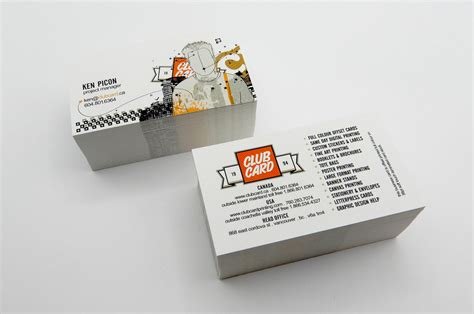
Clubcard Print’s quality story is about materials and texture. They offer an unusually deep range of recycled and tree-free stocks: uncoated recycled white, natural kraft, bamboo, hemp, cotton, and heavy chipboard. Many of these can be paired with white ink, foil stamping, or letterpress-style treatments. The print quality itself is good, but what people remember is how the card feels—dense kraft, fibrous hemp, or soft cotton, with a very “designed” vibe.
If you hand both to someone, the PrintRunner card will feel clean and corporate; the Clubcard card feels more boutique, tactile, and sometimes imperfect in a deliberate, artisanal way. Which is “better” depends entirely on your brand.
Price and value
On price, PrintRunner usually wins.
For standard 2″ x 3.5″ cards on 14 or 16 pt stock, PrintRunner’s base prices plus frequent promos make them a budget-to-midrange option. As quantities climb (250–500+), the per-card cost drops quickly, and they’re often recommended in value-oriented lists as a cheap but reliable option. For a whole sales team, they’re very cost-effective.
Clubcard Print is rarely the cheapest way to get basic cards. Eco materials and specialty processes simply cost more, and their catalog reflects that. You’re often paying a noticeable premium for hemp, bamboo, or heavy chipboard, and you may pay more again for special finishes and slower, more craft-driven production.
From a value standpoint, PrintRunner delivers “solid cards for the money” for a wide audience. Clubcard’s value proposition makes sense when the card itself is a statement piece—if your brand is eco-first, artistic, or you’re charging boutique prices for your services and want your cards to match.
Design templates and customization
PrintRunner offers exactly what most business owners expect:
- A product calculator where you choose size, stock, coating, corners, and quantity
- A library of templates plus the option to upload your own artwork
- An online editor that lets you tweak text, colors, and basic layout
- Optional digital proofs before printing
It’s not the most advanced editor in the market, but it’s comfortable for non-designers and supports professional, print-ready uploads for those who know what they’re doing.
Clubcard Print, on the other hand, is clearly designed around professional files. They provide downloadable layout templates and detailed specs for each stock and finish, but they don’t really compete with drag-and-drop consumer design tools. Their ideal customer is a designer or brand owner using Illustrator, InDesign, or similar, who is happy to prep files and follow guidelines. You can absolutely get gorgeous results—but the tools don’t hold your hand.
If you want to design from scratch in-browser using pre-made layouts, PrintRunner is friendlier. If you already work with a designer or are one yourself and you want unusual stocks, Clubcard’s ecosystem is more appealing.
Customer service
Customer service is one of the clearest differences between the two.
PrintRunner consistently pulls in positive comments about helpful reps, quick responses, and painless reprints when issues come up. Their site highlights accessible phone and email support, and third-party reviews regularly mention good communication and the sense that problems get resolved without a fight.
Clubcard Print, by contrast, has more of a mixed footprint. Many customers rave about the finished product and appreciate the team’s knowledge of materials and sustainable printing. But you also see some feedback around stricter policies, firm cutoff times, and occasional communication hiccups—especially on complex, specialty jobs or when expectations weren’t aligned up front.
If you want a “plug and play” support experience with lots of hand-holding, PrintRunner is the safer bet. Clubcard can treat you very well, but it behaves more like a busy boutique shop: they expect you to read the specs and work with them as a partner rather than a turnkey service.
Ordering experience and tools
PrintRunner’s ordering flow is straightforward: pick your product, configure specs with a live-updating price, upload or design your card, approve your proof, and check out. The site is laid out like a modern ecommerce store, and it’s easy to find business card types (standard, rounded, spot UV, thick, etc.) without too much digging.
Clubcard’s ordering experience mirrors its catalog complexity. There are separate product pages for kraft cards, recycled uncoated cards, hemp, bamboo, cotton, chipboard, foil, and more. Each one has its own limitations, turnaround estimates, and design guidelines. If you know what stock you want, that’s fantastic. If you’re new to print, it can feel overwhelming, and there’s no simple “start from a template and go” flow.
In short: PrintRunner’s tools are built to be accessible. Clubcard’s tools are built to be precise.
Turnaround time and shipping
PrintRunner is built for speed. Standard business cards often offer next-business-day printing, and many customers mention being pleasantly surprised by how quickly orders show up. Combined with competitive ground shipping options, they’re a strong fit when you have a conference, trade show, or launch looming and can’t afford delays.
Clubcard Print’s turnaround depends heavily on the product. Some digitally printed options can move reasonably quickly, but many of their signature eco and specialty stocks have longer production timelines. When you’re dealing with heavy chipboard, specialty foils, or tree-free stocks, you’re often in “plan ahead” territory rather than “need cards this week.”
If your timeline is tight or unpredictable, PrintRunner has the clear advantage. Clubcard rewards patience with unique results.
Use cases / Best for
PrintRunner is best for:
- Small businesses that need sharp, standard cards at a good price
- Teams ordering multiple names/titles across departments
- Time-sensitive projects where fast turnaround and predictable service matter
- Customers who want a simple editor and straightforward upload process
Clubcard Print is best for:
- Eco-conscious brands that want recycled, post-consumer, or tree-free stocks
- Designers and agencies who are comfortable working with detailed print specs
- Artistic, boutique, or indie businesses that want their cards to feel “crafted”
- Projects where the card’s material and tactile feel are part of the brand story
For most general-purpose business cards, PrintRunner will make more sense. Clubcard Print shines when you’re chasing a specific aesthetic or sustainability story.
Pros and cons
PrintRunner – Pros
- Strong balance of quality, price, and options
- Very fast production on standard and many premium cards
- Generally excellent customer reviews for support and problem resolution
- Templates and tools that work for non-designers
- Plenty of upgrades (thicker stocks, spot UV, rounded corners, etc.) without getting confusing
PrintRunner – Cons
- Fewer truly exotic materials than specialty/boutique shops
- Online editor is good, but not the flashiest in the industry
- Brand vibe is practical rather than premium or artsy
Clubcard Print – Pros
- Deep catalog of recycled, post-consumer, and tree-free stocks
- Distinctive kraft, hemp, bamboo, cotton, and chipboard options
- Specialty finishes (white ink, foil, letterpress-style) that stand out in hand
- Great fit for brand identities centered on sustainability or craft
Clubcard Print – Cons
- More expensive than mass-market printers for basic cards
- Longer and more variable turnaround on many of their signature products
- Limited beginner-friendly design tools; assumes some print knowledge
- Ordering flow can feel complex due to many product variations
Final verdict and recommendation
For most business card buyers, we recommend PrintRunner. It offers a very good balance of quality, price, speed, and support, with tools that won’t intimidate non-designers. If you just need professional, on-brand cards that arrive on time and don’t cost a fortune, PrintRunner is the obvious choice.
Clubcard Print earns a strong recommendation as a niche specialist. When your brand story is tied to recycled or tree-free stocks, when you want kraft or hemp cards with white ink, or when you’re willing to pay a premium for tactile, boutique pieces, Clubcard is a great option—as long as you’re comfortable with more complex options and longer lead times.
So: PrintRunner for everyday professional cards, Clubcard Print when you want the card itself to feel like a small piece of sustainable, crafted design.