
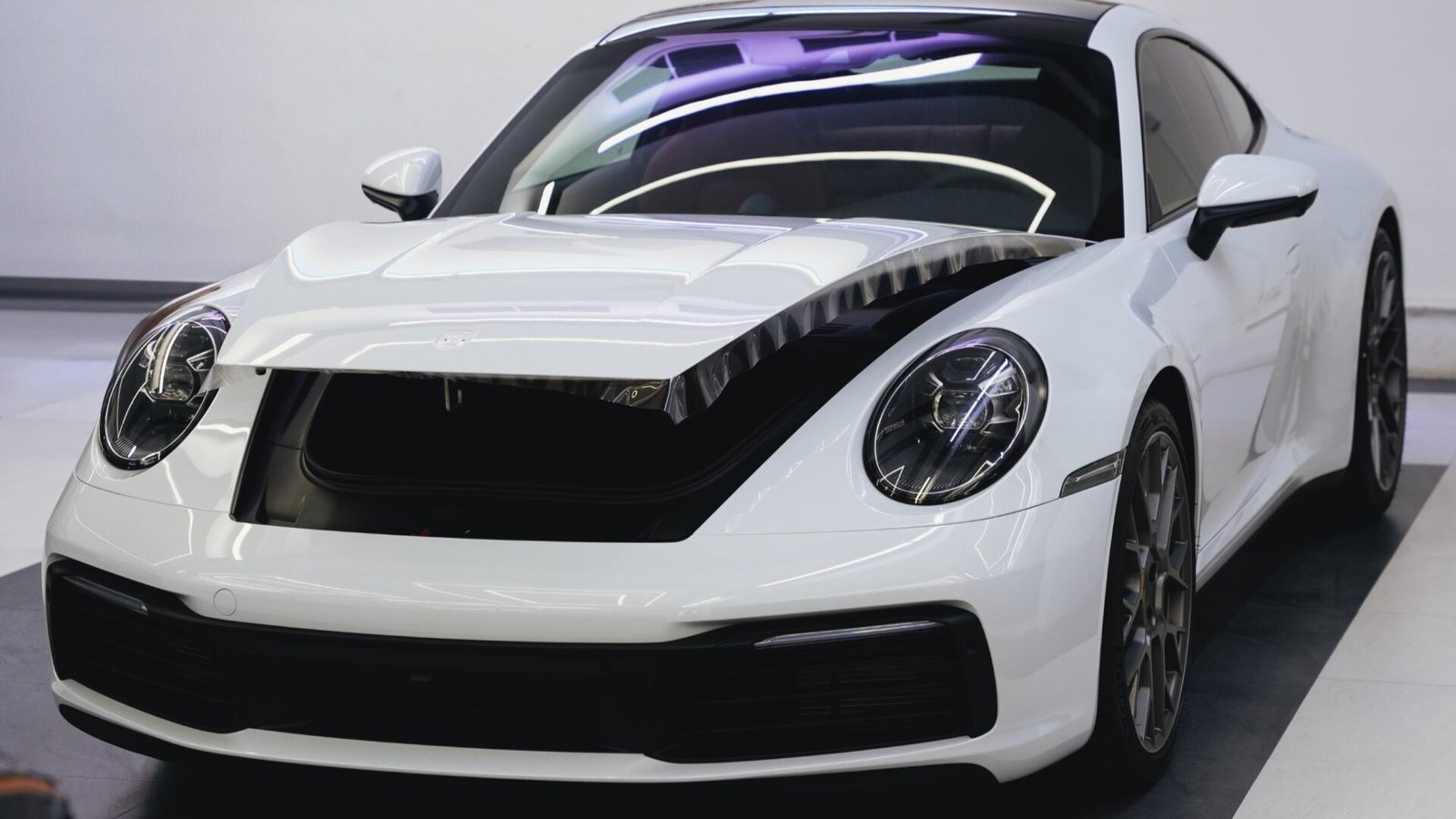
PPF Vs Car Wrap For Paint Protection: The Basic Difference
A car wrap can make a vehicle look completely different. PPF is usually less dramatic, but it does the job most owners care about after the first freeway drive: it helps keep the paint from getting chewed up.
That is the main difference in PPF vs car wrap for paint protection. Paint protection film, often called PPF or clear bra, is made to protect painted surfaces from road damage. A vinyl car wrap is made to change the look of the vehicle with a new color, texture, graphic or finish.
Both products go over the paint. Both can be removed by a qualified installer. Both need clean, sound paint underneath. But they are not interchangeable. A wrap may offer a light barrier against minor wear, but PPF is the product designed for real paint defense.
What Is PPF?
PPF stands for paint protection film. It is a clear or tinted urethane film installed over painted surfaces to help protect them from rock chips, bug splatter, road salt, bird droppings, light scratches and general road debris.
Modern PPF is usually installed on the most vulnerable areas first:
- front bumper
- hood
- front fenders
- side mirrors
- rocker panels
- door cups
- door edges
- trunk ledge
Full-body PPF is also an option, but it costs much more because it covers almost every painted panel.
Most good PPF products are thick enough to absorb small impacts that would otherwise hit the paint directly. Many also have self-healing top coats, which means light swirl marks and fine scratches can soften or disappear with heat from the sun, warm water or a heat gun. It is not magic armor. A hard enough impact can still damage the film or paint. But for normal driving damage, PPF is the stronger option.
What Is A Car Wrap?
A car wrap is usually made from cast vinyl film. It is installed over the vehicle’s painted panels to change the color, finish or design. Wraps are common for matte colors, satin finishes, gloss color changes, chrome accents, race stripes, commercial graphics and full advertising wraps.
A wrap can protect the paint from some light surface wear simply because it puts a layer over the factory finish. But that layer is thinner than most PPF and is not primarily made for impact resistance. It is better to think of vinyl wrap as a style product with minor protective benefits, not a true paint protection product.
This matters because a wrapped front bumper can still show damage from rock chips. The vinyl may tear, pit or mark in places where PPF would usually perform better.
Quick Comparison
| Category | PPF | Car Wrap |
|---|---|---|
| Main Purpose | Paint protection | Color change, finish change or graphics |
| Best For | Rock chips, scratches, road debris, bug stains | New look, branding, personalization |
| Typical Look | Clear gloss, clear matte, tinted or colored PPF | Gloss, matte, satin, metallic, chrome, printed graphics |
| Impact Protection | Strong | Limited |
| Self-Healing | Common on quality films | Not typical in standard vinyl wraps |
| Coverage Options | Partial front, full front, high-impact areas or full vehicle | Partial accents, full vehicle or commercial graphics |
| Cost | Higher for full coverage | Often lower than full-body PPF, but varies by finish |
| Best Use Case | Protecting valuable or new paint | Changing the vehicle’s appearance |
Which Protects Better From Rock Chips?
PPF protects better from rock chips. That is the simplest answer.
The reason is material thickness and design. Many paint protection films are around 7.5 to 8 mil thick, while common vinyl wrap films are often much thinner. That extra thickness gives PPF more ability to absorb small hits from gravel, sand and debris.
A vinyl wrap can still take some abuse before the paint does. But it is more likely to tear, nick or show damage when hit by sharp debris. This is especially noticeable on front bumpers, lower doors, rocker panels and behind the wheels.
For drivers who spend a lot of time on highways, canyon roads, construction areas or winter roads, PPF is usually the better choice. A wrap may look good, but PPF is the product you choose when you are tired of seeing new chips every time you wash the car.
Which Looks Better?
This depends on what you want.
If you like the factory paint and want to preserve it, clear PPF is usually the better choice. A good install can be hard to notice from a few feet away, especially on gloss paint. Matte PPF can also be used to give gloss paint a satin or frozen look while still protecting it.
If you want a totally new color, a vinyl wrap gives you more choices. Vinyl wraps come in a huge range of finishes, including gloss, satin, matte, pearl, metallic, color-shift, carbon fiber textures and printed designs.
There is also a middle option: colored PPF. Colored paint protection film is newer and combines some of the style benefits of vinyl wrap with the stronger protection of PPF. It usually costs more than standard vinyl, but it can make sense if you want both color change and serious protection in one product.
Cost And Coverage: Where The Decision Gets Practical
For most people, the real question is not “Which product is better?” It is “Where should I spend the money?”
Full-body PPF gives the most complete paint protection, but it is expensive. A full color-change wrap can also be expensive, especially on larger vehicles or complex body shapes. Specialty finishes cost more and may require more careful maintenance.
A practical middle ground is full-front PPF. This usually covers the front bumper, full hood, full fenders and mirrors. Those areas take the worst damage, so full-front coverage gives you a lot of protection without paying for the entire vehicle.
A vinyl wrap makes more sense when appearance is the main goal. For example, you might wrap a white car in satin green because you want a new look. But if the car sees regular highway use, it may still be smart to add PPF over the front bumper and other high-impact areas after the wrap.
Here is the simple decision rule:
Choose PPF when paint protection is the priority.
Choose vinyl wrap when appearance is the priority.
Choose colored PPF or wrap plus PPF when you want both and the budget allows it.
Can You Put PPF Over A Car Wrap?
Yes, in many cases PPF can be installed over a vinyl wrap, especially on high-impact areas like the front bumper and hood. This setup is common when someone wants a color-change wrap but does not want the front end to get shredded by road debris.
There are tradeoffs. It costs more, adds another installation step and depends heavily on installer skill. The wrap underneath also needs to be installed cleanly. If the vinyl has lifted edges, trapped contamination or poor adhesion, adding PPF over it can create problems.
This approach is usually best for higher-value vehicles, enthusiast builds, show cars or anyone paying for a full wrap and planning to keep it looking good for several years.
What About Ceramic Coating?
Ceramic coating is often mentioned with PPF and wraps, but it does a different job. It can make the surface easier to clean and improve water behavior, gloss and stain resistance. It does not replace PPF for rock chip protection.
Think of ceramic coating as a maintenance layer. Think of PPF as an impact layer. A coating can be useful over paint, PPF or some wraps, but it will not stop gravel from physically striking the surface.
Common Mistakes To Avoid
One common mistake is expecting a vinyl wrap to protect like PPF. It will not. A wrap can help preserve the paint from light surface wear, but it is not the right product if your main concern is chips.
Another mistake is installing film over poor paint. Both PPF and vinyl wrap work best on clean, well-bonded paint. If the paint is peeling, oxidized, poorly repaired or freshly repainted without proper cure time, removal can become risky.
A third mistake is choosing only by price. Film quality matters, but installation matters just as much. A skilled installer will stretch, align, trim and finish edges properly. A poor install can leave visible seams, lifted edges, trapped dirt or blade marks in the paint.
Which One Should You Choose?
Choose PPF if your vehicle is new, expensive, freshly corrected or worth preserving. It is also the better choice if you do a lot of highway driving or live somewhere with gravel, winter road salt or rough road conditions.
Choose a car wrap if you mainly want a different look. Wraps are great for personalization, business branding and temporary color changes. They can protect the original paint from some mild wear, but that should be treated as a bonus.
Choose colored PPF if you want a color change but still care about chip resistance. It is not always the cheapest route, but it solves the biggest weakness of standard vinyl wrap.
For most daily drivers, the best value is simple: protect the high-impact areas with PPF. If you want a new color, wrap the car, then add PPF where the vehicle takes the most abuse.
FAQs
Is PPF Better Than A Car Wrap For Paint Protection?
Yes. PPF is better than a car wrap for paint protection because it is thicker and designed to resist rock chips, scratches, stains and road debris. A vinyl wrap is mainly for changing the vehicle’s appearance.
Does A Car Wrap Protect Factory Paint?
A car wrap can help protect factory paint from light surface wear, sun exposure and minor scratches. It does not provide the same impact protection as PPF, especially on front bumpers and other high-impact areas.
Is PPF Worth It On A Daily Driver?
PPF can be worth it on a daily driver if the vehicle sees highway miles, gravel roads, winter roads or frequent washing. Full-front PPF is often the most practical option because it protects the areas that take the most damage.
Can PPF Be Removed?
Yes. PPF can usually be removed by a qualified installer, especially when the film is still within its useful life and the paint underneath is in good condition. Old film, poor paint or bad installation can make removal harder.
Can A Wrapped Car Still Get Rock Chips?
Yes. A wrapped car can still get rock chips. The vinyl may take the first hit, but it can tear or pit. If rock chip protection matters, add PPF over the most vulnerable wrapped areas.
Is Colored PPF Better Than Vinyl Wrap?
Colored PPF is usually better for protection, while vinyl wrap usually offers more finish options and may cost less. Colored PPF makes sense when you want a new look and stronger paint protection in one product.