
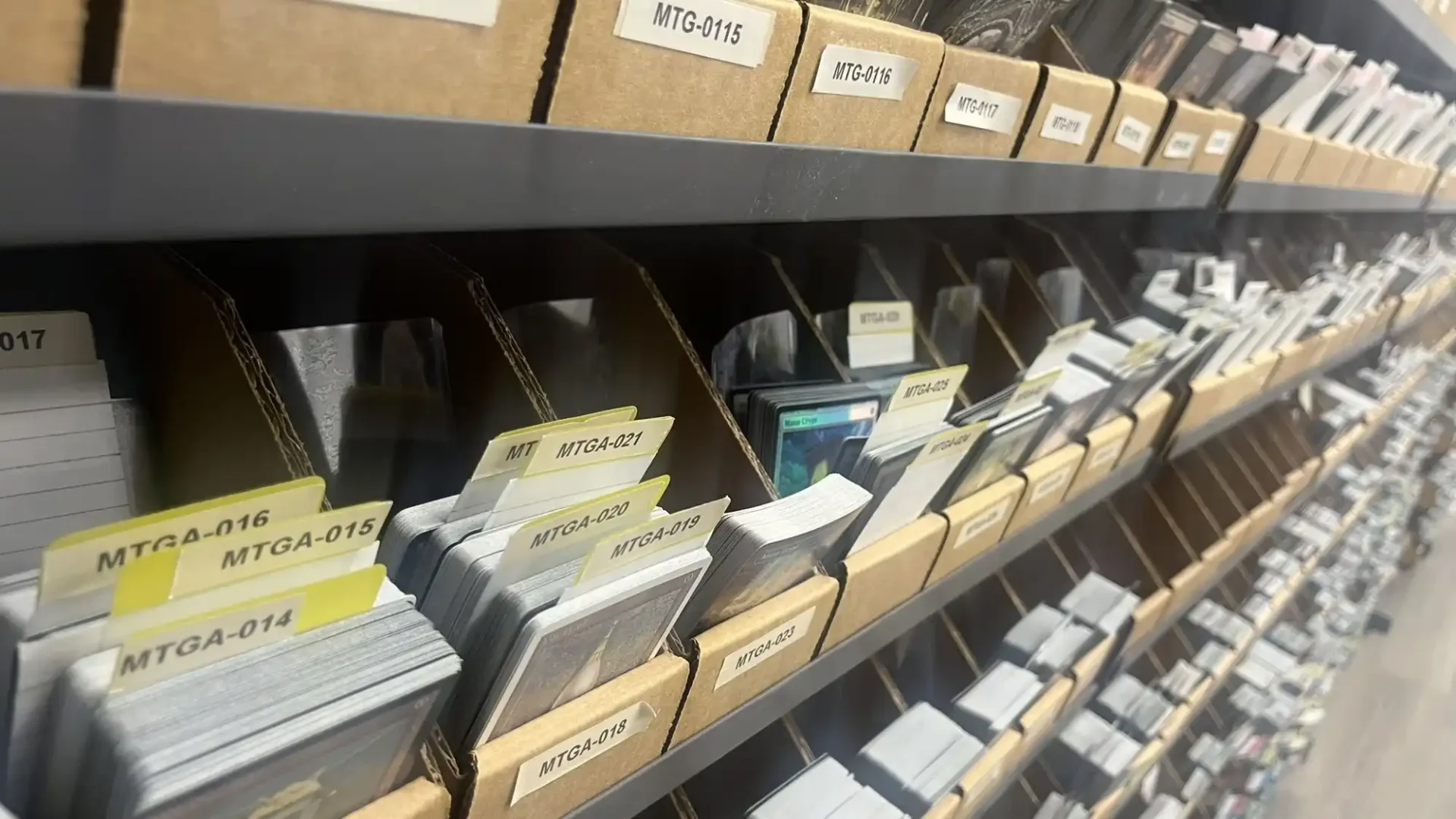
Who the product is for
Best Magic: The Gathering Proxies for Replacing Damaged Cards in Casual Decks is a very specific segment—and Proxy King fits it well if you recognize yourself in any of these:
- Casual Commander / kitchen-table players whose group allows proxies and just want games to run smoothly.
- Players with “played to death” staples (creased fetches, cloudy foils, bent edges, sticky sleeves, water-damaged boxes) who don’t want a damaged card to become a marked card situation.
- People protecting expensive originals by keeping them safe and using a proxy copy for regular play.
- Players who care about legibility and consistency—the proxy needs to look right across the table and shuffle like the rest of the deck once sleeved.
- Anyone replacing a few cards, not printing an entire proxy cube or a full 100-card list every weekend.
This is less ideal if your goal is “print 100–500 cards as cheaply as possible.” ProxyKing can do bigger orders, but their value proposition shines brightest when you’re replacing a small set of problem cards with something that feels premium in sleeves.
What problem it solves
Replacing damaged MTG cards sounds simple until you try to do it in real life:
- Buying a clean replacement can be expensive (especially for older staples).
- Playing damaged originals can create marked-card concerns (even unintentionally).
- Paper-in-sleeve proxies work, but they often look and feel inconsistent—especially in a deck where the rest of the cards are uniform.
ProxyKing’s core “fix” for this segment is: premium-feel proxies designed to look crisp and shuffle consistently in sleeves, backed by clear support policies.
What stands out about ProxyKing’s approach:
- Consistency-first quality expectations. They publish what counts as normal variation vs. a real defect (blur/banding, extreme miscuts, wrong/missing cards, transit damage, etc.) and route those issues through a defined reprint/replacement/refund process.
- Clear guardrails around responsible use. ProxyKing explicitly frames their products for casual play, Commander, cubes, and playtesting where proxies are allowed—and they’re direct about not using them in Wizards-sanctioned events.
- No “grey area” resale language. They clearly state proxies must never be sold/traded/represented as authentic.
In other words: for the “my cards got wrecked but I still want to play my deck” problem, ProxyKing is trying to remove the two biggest friction points—ugly/inconsistent proxies and unclear policies when something arrives imperfect.
Pricing
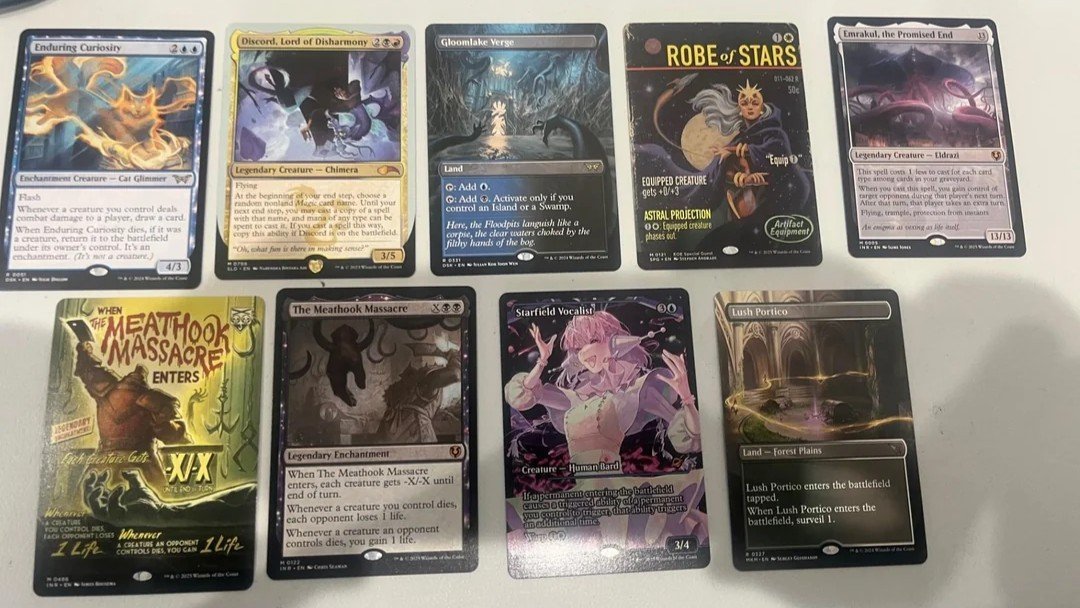
ProxyKing’s pricing is straightforward for the “replace a few damaged cards” use case.
Typical per-card pricing
- Many standard MTG proxy singles commonly appear around $4.00.
- Foil listings are commonly around $5.00 (and you’ll sometimes see sale pricing).
That puts ProxyKing in the “premium single” tier rather than “bulk deck-printing” pricing—which is exactly why it fits this damaged-card segment best: you’re usually replacing 5–20 cards, not 100.
Shipping and turnaround
ProxyKing publishes processing expectations and shipping options, including:
- Processing typically within 1 business day, with peak periods up to 3 business days.
- Multiple shipping choices (including options that prioritize speed vs. cost), with published shipping guidance and a separate tracking FAQ to set expectations.
Returns and fixes
Because these are custom-made products, ProxyKing states they don’t accept change-of-mind returns, but they do outline what happens if there’s a covered issue (reprint/replacement/refund depending on the situation). That matters a lot when you’re ordering “replacement” cards—because your bar for correctness is higher than a novelty purchase.
Comparisons
Here’s how ProxyKing stacks up against the realistic alternatives when you’re replacing damaged Magic: The Gathering cards.
ProxyKing vs buying replacement singles
Buying real singles is the cleanest solution if you need the card for sanctioned play, collecting, or resale value. If you’re replacing a damaged staple purely for casual gameplay, the calculus changes:
- If the original is pricey, rebuying can feel bad.
- If the original still has collector value, repeatedly shuffling it can feel worse.
ProxyKing wins when your goal is: keep playing the deck without worrying about the condition of the card.
Real singles win when you need: tournament legality, authenticity, or long-term resale value.
ProxyKing vs paper-in-sleeve “quick proxies”
Paper proxies are cheap and fast, but for replacing damaged cards they create two issues:
- Feel/consistency: paper proxies can change how the deck shuffles and handles.
- Table readability: they often look messy or unclear across the table.
ProxyKing wins when you want your deck to feel uniform and look clean.
Paper wins when you just need a temporary stand-in for a single night.
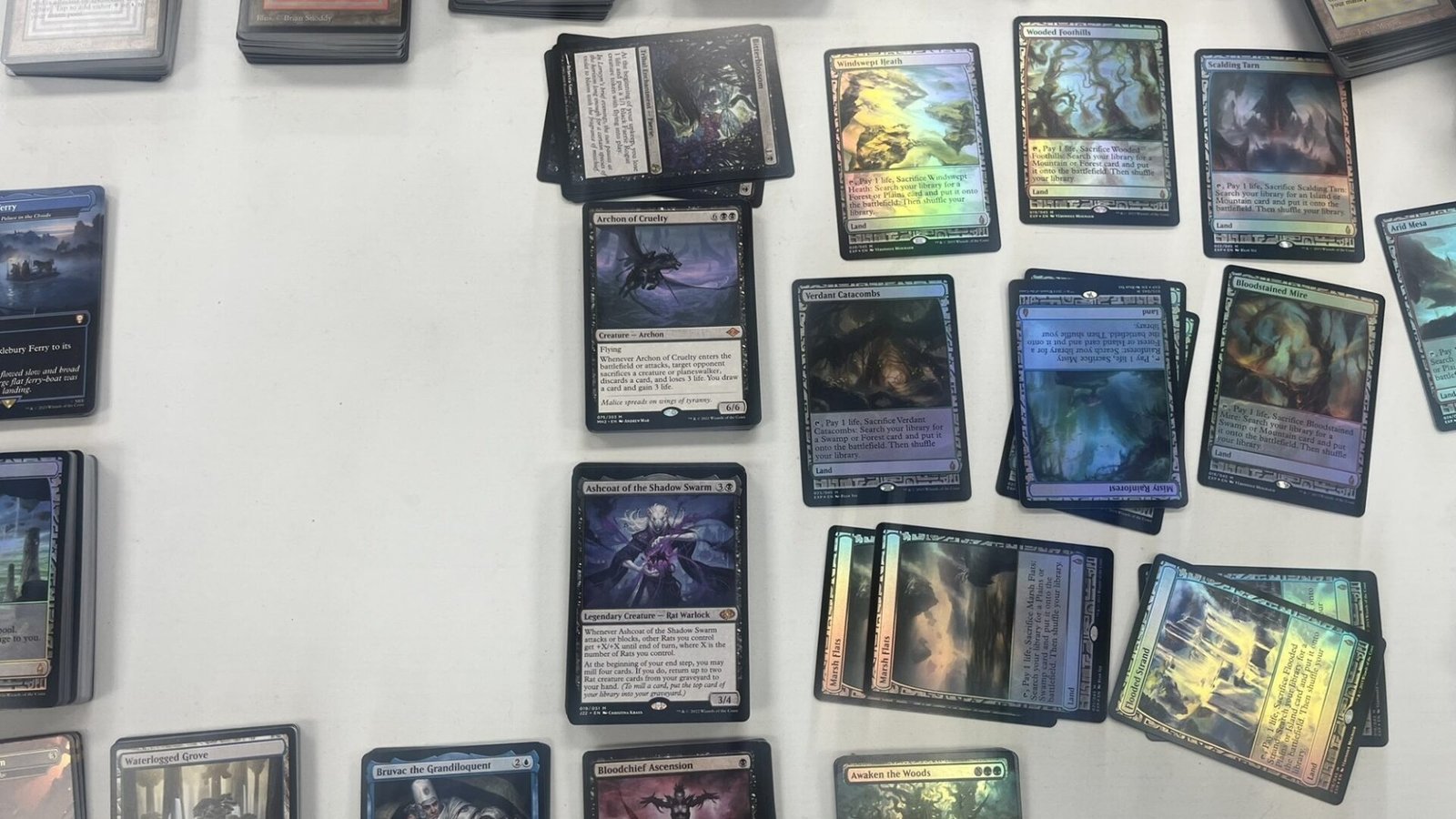
ProxyKing vs bulk print-on-demand services
Decklist-upload print services are usually the best value when you’re doing full decks, cubes, or huge batches. If you only need to replace 8 damaged staples, bulk services can be overkill (setup, minimums, lead times, etc.).
ProxyKing wins for small “replacement” orders where convenience and premium feel matter.
Bulk POD wins when you’re proxying entire decks at scale. PrintMTG is our recommendation for this use case.
ProxyKing vs sanctioned-event “judge proxy” exceptions
If you’re playing a Wizards-sanctioned event, proxies generally aren’t allowed (with limited exceptions like judge-issued replacements under specific circumstances). If your goal is sanctioned play, ProxyKing isn’t the tool—your best option is to replace the damaged card with an authentic copy or follow the event’s official guidance.
FAQs
Are ProxyKing cards legal for sanctioned tournaments?
No. ProxyKing explicitly positions their cards for casual play and playtesting where proxies are allowed, and not for Wizards-sanctioned events. If you play anywhere that’s sanctioned or prize-driven, ask the organizer first—and follow their rules.
Can I use ProxyKing cards to replace damaged cards at my LGS Commander night?
Often yes—if it’s unsanctioned and your store allows proxies. Many stores do for casual Commander nights, but it’s always organizer/store discretion. Ask first.
What if my order arrives with a defect or the wrong card?
ProxyKing publishes a Quality Guarantee and a process for covered issues—typically reprint/replacement/refund depending on what happened. If you’re buying proxies as replacements, this policy clarity is a big deal.
Do they accept returns?
They state no returns or refunds for change-of-mind purchases because products are custom-made. But if there’s a covered issue (their error or a qualifying defect), they outline how they make it right.
Will ProxyKing replacements feel the same in sleeves as my other cards?
That’s the intent: consistent cuts and a premium in-sleeve feel. Still, the best practice is to sleeve the deck uniformly (same sleeves, same inner sleeves if you use them) and do a quick shuffle/stack test before game night.
Should I tell my group they’re proxies?
Yes. ProxyKing’s policy is explicit: don’t misrepresent proxies as authentic. Healthy casual proxy culture depends on transparency.
What’s the best way to use ProxyKing for replacing damaged cards?
Start with the cards that are:
- Most visibly damaged
- Most expensive to replace
- Most frequently shuffled/handled (lands, staples, core engines)
That’s where premium replacements pay off the fastest.
Final verdict
If your goal is exactly this—replacing damaged cards in casual decks without rebuying expensive staples—ProxyKing is one of the better fits in the proxy space. The combination of consistent, premium-feel singles plus clearly written policies is what makes it work for the “replacement” segment.
Just keep the boundaries clean: use them where proxies are allowed, don’t treat them like tournament cards, and don’t do anything that could confuse buyers or players about authenticity.
And yes: Best Magic: The Gathering Proxies for Replacing Damaged Cards in Casual Decks is a narrow niche—but it’s a real one, and ProxyKing is built for it.
References and citations
ProxyKing Trust Center (policies hub, “single source of truth”). Proxy King Trust Center