
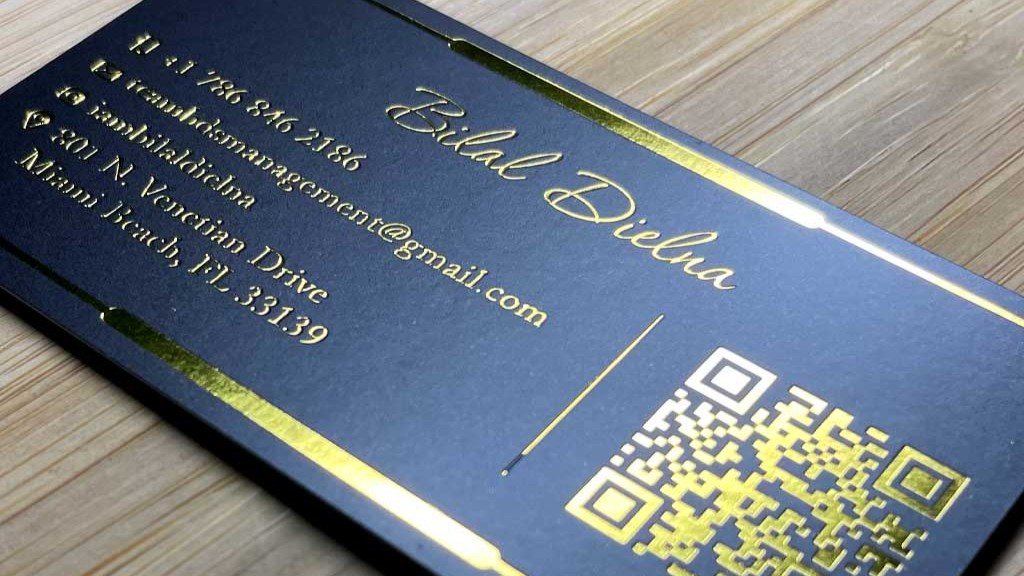
If you’re searching for the best business card printers for specialty finishes, you already know the basic truth: the “standard matte 16pt” era ends the moment someone hands you a soft-touch card with a raised UV logo and you immediately start questioning every business decision you’ve ever made.
This guide turns finishes into purchase decisions. It’s not “what is spot UV” (you’ve got that). It’s: who prints it well, who offers it consistently, and who’s worth the money for the effect you actually want.
Best business card printers for specialty finishes: quick picks
If you just want the short list by finish:
Foil (stamped or raised)
- MOO for clean, premium foil on smaller runs and strong templates
- Primoprint for raised foil and good value
- Elite Flyers for foil plus velvet/soft-touch and add-ons like edges
Spot UV / Spot gloss (including raised)
- Primoprint for raised spot UV (tactile, “you can feel it”)
- MOO for spot gloss / raised spot gloss on premium stocks
- Elite Flyers for spot UV and raised spot UV on velvet-style cards
Soft touch (velvet/soft-touch lamination)
- MOO for a polished soft-touch experience with strong design tools
- Jukebox Print for premium soft touch plus lots of pairing options (spot gloss, specialty stocks)
- PsPrint for a solid “commercial printer” soft-touch option without boutique pricing
Painted edges / colored edges
- Jukebox Print for lots of edge colors and premium execution
- Elite Flyers for painted edges and foil edges bundled with other upgrades
- PrintRunner for painted-edge cards when you want a more straightforward trade-printer workflow
Now let’s make that actionable.
How to choose a specialty finish without wasting money
Specialty finishes are not all equally “visible” in real life.
A quick sanity check:
- Foil is the easiest “wow” effect from 2–3 feet away (especially under warm lighting).
- Spot UV / spot gloss is the most lighting-dependent. In a dim bar, it can look like nothing. Under office lights, it pops.
- Soft touch is mostly a tactile flex. People have to hold it.
- Painted edges is the “this feels expensive” signal, especially on thick stocks. It’s also the first thing people notice when the card is sitting on a counter.
So pick the finish based on how your card is actually used:
- Handed directly to clients: soft touch + foil or raised UV
- Left on a counter or stacked: painted edges
- Minimalist design, lots of negative space: spot UV or spot gloss
- Busy design with gradients and photos: foil accents (small) usually works better than spot UV
The three “best overall” specialty-finish printers
If you want the shortest list of shops that reliably live in the specialty world, start here.
Jukebox Print
Jukebox is the “options-first” pick. If you want painted edges, soft touch, spot gloss/UV-style effects, and a deep bench of premium stocks, Jukebox is usually where you end up. In our internal scoring set, it’s at the top for quality and options/finishes, with the expected tradeoff: it’s not a bargain shop. Business Card Review Score Table
Choose Jukebox when:
- you care about unique materials and finish combinations
- you want painted edges done like they’re supposed to be done (thick stock, clean edge)
- you’re okay paying more to avoid “this is slightly off” regrets
Elite Flyers
Elite Flyers is the pragmatic specialty shop: velvet/soft-touch style cards with a menu of upgrades (spot UV, raised spot UV, foil stamping, painted edges, foil edges). It’s especially appealing when you want multiple specialty effects in one order without turning the project into a dissertation.
Choose Elite Flyers when:
- you want soft-touch velvet plus add-ons (spot UV, foil, edges)
- you need a faster turnaround than the boutique paper playgrounds
- you’re ordering enough quantity that “trade-printer vibes” are fine
Primoprint
Primoprint is the “premium effects without premium pricing” option, particularly for raised finishes. If your goal is raised foil or raised spot UV and you can upload a proper file, they’re one of the best value picks. Their online tools are not the reason you’re here, but the finished cards often are.
Choose Primoprint when:
- you want raised finishes (tactile) and good value
- you already have a design file (or a designer)
- you want premium feel without MOO-level per-card pricing
Best for foil business cards
Foil is the easiest specialty finish to “read” instantly. It’s also the easiest to mess up if the printer’s registration is sloppy or if your design uses tiny foil text.
MOO: best foil for small runs + strong design experience
MOO is the premium “everything feels polished” option. If you’re ordering smaller quantities and you want foil that looks crisp, with templates that don’t scream “default template,” MOO is a safe bet. It’s not cheap, but it’s consistently premium.
Best for:
- consultants, creatives, and anyone ordering 50–200 at a time
- minimalist designs with foil logos or type
Primoprint: best value for raised foil (and options like holographic)
If you want a raised foil effect you can actually feel, Primoprint tends to hit the sweet spot: premium-looking results, less painful pricing, and a finish lineup that’s clearly built for “make this pop.”
Best for:
- raised foil logos
- people who want “premium” but still want to order enough cards to actually hand them out
Elite Flyers: best foil when you also want velvet/soft touch + upgrades
Elite Flyers shines when foil is part of a bigger plan: velvet/soft-touch base, then foil, then maybe painted edges. If you’re building the “this card feels expensive” stack, they’re worth a look.
Best for:
- thick velvet cards with foil accents
- mixing foil with spot UV or edge options
Best for spot UV and spot gloss (including raised)
Spot UV (or spot gloss) is basically controlled shine. The key is contrast: matte/soft-touch background, glossy highlighted elements.
Primoprint: best raised spot UV for tactile impact
Raised spot UV is the version that feels like a feature instead of a lighting trick. If you want someone to run their thumb over your logo like a weirdo (compliment), raised spot UV is the move.
Best for:
- logos, patterns, and bold shapes
- designs that look good even if the shine is subtle
MOO: best spot gloss for clean, premium presentation
MOO’s spot gloss and raised spot gloss are great when the design is clean and the printing needs to feel “premium stationery,” not “trade show handout.”
Best for:
- modern, minimal designs with lots of negative space
- small to mid-size quantities with a high-end brand vibe
Elite Flyers: best for spot UV on velvet cards with lots of upgrade paths
If your goal is velvet/soft-touch plus spot UV (and maybe foil), Elite Flyers is built for that combo.
Best for:
- velvet/soft-touch cards where the UV effect is part of a premium stack
- getting multiple specialty effects from one vendor
Best for soft touch business cards
Soft touch is the finish you feel before you even read the name. It’s also the finish that can show scuffs on heavy dark coverage, so your design choices matter.
MOO: best soft-touch “premium out of the box”
MOO’s soft-touch experience is consistently polished: stock, finish, and the overall “this feels like a brand” vibe. If you want soft touch and don’t want to think too hard, this is the easy answer.
Jukebox Print: best soft touch when you want options
Jukebox is the pick if you want soft touch, but also want to pair it with other effects (spot gloss, specialty stocks, edge options depending on product line).
PsPrint: best commercial-printer soft touch value
PsPrint is a strong “serious printer” option when you want soft-touch coating on a solid stock without boutique pricing. It’s not trying to be fancy in the UI, it’s trying to print reliably.
GotPrint: best budget-friendly “thick + nice feel” via Trifecta-style stocks
GotPrint’s Trifecta line is popular because it delivers thickness and a premium-in-hand feel at a price that doesn’t punish you for ordering enough cards to be useful. If you want “thick card, pleasant finish” without chasing ultra-boutique effects, it’s a strong budget specialty lane.
Best for painted edges (and foil edges)
Painted edges are one of the fastest ways to make a card feel expensive. They also tend to work best on thick stocks where the edge is a feature, not an afterthought.
Jukebox Print: best painted edges for color choice + premium execution
If painted edges are the hero, Jukebox is usually the cleanest “go here first” answer. Lots of color options, strong print reputation, and the kind of product lineup that suggests they do this all day.
Elite Flyers: best painted edge bundle with other specialty upgrades
Elite Flyers is great when painted edges are part of a bigger upgrade stack: velvet/soft touch base plus foil, spot UV, and edges.
PrintRunner: best painted edges for a straightforward trade-printer workflow
PrintRunner’s painted-edge offering is a good fit when you want painted edges but prefer a more standard online print workflow and pricing style.
Clubcard Printing: best for bespoke edge options, with tradeoffs
Clubcard is the “artisan menu” pick. Painted edges, UV spot gloss, foils, and more. The tradeoff is that it’s less “consumer-friendly,” and in our internal scoring set, it’s not the top pick for speed or smooth ordering. If you know what you want and you’re comfortable with print specs, it can be worth it.
A quick “don’t mess this up” checklist for specialty finishes
You don’t need a 40-step prepress ritual. You do need to avoid the classic mistakes.
- Foil: avoid tiny foil text, keep strokes thick, and don’t rely on hairline details.
- Spot UV / gloss: build the gloss layer cleanly (usually as a separate spot layer or mask). Use it to highlight, not to coat a busy design.
- Soft touch: be cautious with heavy black coverage and large solid dark areas if you hate scuff marks.
- Painted edges: thick stocks show edges best. Also, edge color choice matters more than you think. Match your brand color or go neutral on purpose.
And yes, ordering a sample pack before you commit is the most boring advice that saves the most money.
Final verdict
If you want the best business card printers for specialty finishes and you don’t want to overthink it:
- Pick Jukebox Print when options and premium execution matter most.
- Pick Elite Flyers when you want a velvet/soft-touch base with a lot of specialty upgrades in one place.
- Pick Primoprint when you want raised finishes and strong value (and you can supply a proper design file).
- Pick MOO when you want premium feel in smaller quantities with the best templates and a polished experience.
- Pick PrintRunner for painted edges and common specialty needs in a more traditional trade-printer workflow.
- Pick Clubcard when you want bespoke, artisan, eco-leaning options and you’re okay with tradeoffs in “smooth and fast.”
That’s the whole game: pick the finish that actually shows up in your real-life use case, then pick the printer whose strengths match that finish.