
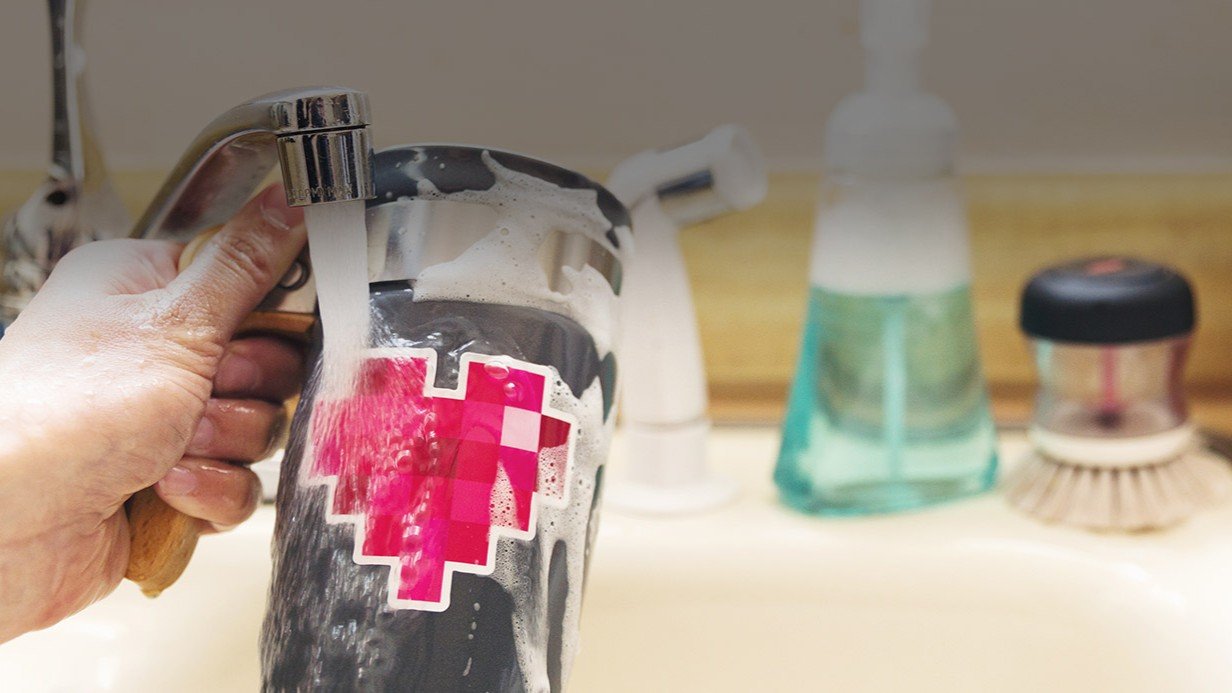
If you’re ordering durable logo stickers, the material choice is basically the whole game. A great logo can still look cheap if the sticker curls, fades, or peels after a week. And nothing kills “professional brand vibes” faster than a sticker that gives up halfway through a light drizzle.
For most real-world uses, you’ll be choosing between vinyl (PVC), polyester (PET), and BOPP (polypropylene). The “best” one depends on where the sticker is going, what it’s stuck to, and how much abuse it’s going to take.
Vinyl (PVC) is the go-to for durable logo stickers
If you want one answer that works for most people, it’s vinyl.
Vinyl (PVC) is popular because it’s flexible, water-resistant, and holds up well outdoors. It’s the classic choice for durable logo stickers you plan to use on:
- water bottles and tumblers
- laptops and cases
- car windows and bumpers
- helmets, coolers, toolboxes
- packaging inserts and giveaway stickers
Vinyl also handles curves better than rigid films. So if your sticker is going on a bottle, a hard hat, or anything with a bend, vinyl is usually the safer bet.
The vinyl itself matters, but what really pushes vinyl into “lasts for years” territory is the finish on top (we’ll get there).
Polyester (PET) is for harsh conditions and “don’t fail” labels
Polyester (PET) is the tough sibling.
If vinyl is a great all-around pick, polyester is what you choose when the sticker needs to stay readable through heat, chemicals, abrasion, and time. PET is common for:
- equipment labels and asset tags
- shop, garage, and industrial environments
- outdoors where you expect long exposure
- places where cleaning chemicals are normal
PET tends to be more rigid than vinyl, so it’s often better on flat surfaces than highly curved ones. But when you need a label that holds up in the real world, polyester is hard to beat.
If your “logo sticker” is actually a long-term brand label on a product that will live outdoors, get handled a lot, or wiped down with cleaners, PET is worth a serious look.
BOPP (polypropylene) is great for product labels and moisture
BOPP shows up a lot in the label world because it’s water-resistant and oil-resistant, and it performs well in refrigeration and moisture-heavy environments.
This is why BOPP is commonly used for:
- beverage labels (condensation happens)
- cosmetics and bathroom products
- food packaging and containers
- anything that might be refrigerated
For branding, BOPP is a strong choice when your “logo sticker” is really a product label that needs to look clean and stay stuck through humidity, spills, and cold storage.
BOPP is not always the best “giveaway sticker” material (vinyl usually wins there), but it shines when the sticker is part of packaging or labeling.
Lamination is the durability multiplier (and it matters more than people think)
Here’s the honest truth: a lot of sticker “durability” is not just the face material. It’s the protective layer on top.
A laminate (or protective coating) helps with:
- UV resistance (less fading in sun)
- scratch resistance (keys, nails, shipping chaos)
- water resistance (shower bottles, coolers, rain)
- overall “this feels premium” texture
Matte vs gloss is mostly a look choice, but both can add protection when done right. Gloss tends to make colors pop. Matte tends to cut glare and can make text easier to read under bright light.
If you want a deeper breakdown, CustomStickers has a solid explainer here: Do My Business Stickers Need to Be Laminated?
Adhesive matters: permanent vs removable vs high-tack
People obsess over vinyl vs PET, then slap the sticker onto a dusty surface and wonder why it peels. Adhesive and application matter.
Here’s the quick breakdown:
- Permanent adhesive (often acrylic-based): the standard for long-life branding stickers. Great for most smooth surfaces.
- Removable adhesive: best for short-term promos, event labels, or situations where you need a clean peel later.
- High-tack adhesive: used for tougher surfaces (some plastics, textured materials, lower surface energy surfaces). It’s more “industrial mode.”
Even the best adhesive won’t bond well if the surface is oily, wet, or dusty. If the sticker is going on drinkware, clean it well first. Sounds obvious. People still skip it.
And yes, the surface matters. Glass and smooth metal are easy. Textured powder coat, rubber, and raw wood are not.
Thickness isn’t everything, but you should understand “mil”
Sticker companies often talk about thickness in mil, which is just “thousandths of an inch.” It’s a normal manufacturing measurement.
A few things to know:
- Many vinyl sticker materials land in the “few mil” range before laminate.
- Lamination adds thickness and protection, which can make a sticker feel more substantial.
- Thicker is not automatically better, but ultra-thin stickers can feel flimsy, especially for handouts.
In practice, a well-made laminated vinyl sticker usually feels sturdy in the hand, lays flat, and resists scratching. That’s what most people mean when they say “quality.”
If your main goal is durable logo stickers that look sharp and survive real use, CustomStickers.com is built around that exact lane, so is Sticker Mule.
From their own material guidance, the big quality signals are:
- Vinyl base material designed for water resistance and UV exposure
- Lamination by default (matte or gloss options) to protect ink and resist scratches
- A focus on stickers that can handle everyday abuse like bottles, laptops, and outdoor placement
That combo, vinyl plus laminate plus a good adhesive, is exactly what most brands need when they’re handing out logo stickers at events or shipping them with products.
Quick pick guide: best materials by use case
Here’s a simple way to choose without overthinking it.
| Your use case | Best material | Why it works |
|---|---|---|
| Giveaways, laptops, bottles, general branding | Vinyl (PVC) + laminate | Flexible, water-resistant, great all-around durability |
| Outdoor equipment, shop tools, long-life labels | Polyester (PET) | Strong resistance to heat, chemicals, abrasion |
| Product labels exposed to moisture or refrigeration | BOPP (polypropylene) | Handles condensation, oils, cold storage well |
| Short-term promos where clean removal matters | Vinyl + removable adhesive | Easier peel, less residue risk |
If you’re stuck choosing between vinyl and PET, ask one question: Is this going on a curved surface or a flat one that will get cleaned a lot? Curves lean vinyl. Harsh cleaning and long-term labeling leans PET.
Make any sticker last longer (even the best material)
No material saves a sticker applied to a dirty surface. Do these and your sticker lifespan jumps.
- Clean the surface with isopropyl alcohol and let it dry
- Apply with pressure across the whole design, especially edges
- Avoid washing for a bit after applying, especially on bottles and tumblers
- Don’t scrub the edges like you’re trying to remove paint
If you’re selling products, consider including one line in your packaging insert: “Clean surface before applying.” You’ll save yourself emails later.
Final thoughts
For most brands, vinyl (PVC) is the best choice for durable logo stickers, especially when it’s paired with a real laminate and a solid permanent adhesive. If you need maximum toughness in harsh environments, polyester (PET) is the upgrade. And if you’re labeling products that face moisture or refrigeration, BOPP is a strong, practical option.
If you want the simple route that covers 90 percent of real-world use, go with quality laminated vinyl. That’s also where CustomStickers.com tends to shine: durable materials, laminated finishes, and the kind of build that actually holds up when the sticker leaves your desk and enters the wild.