
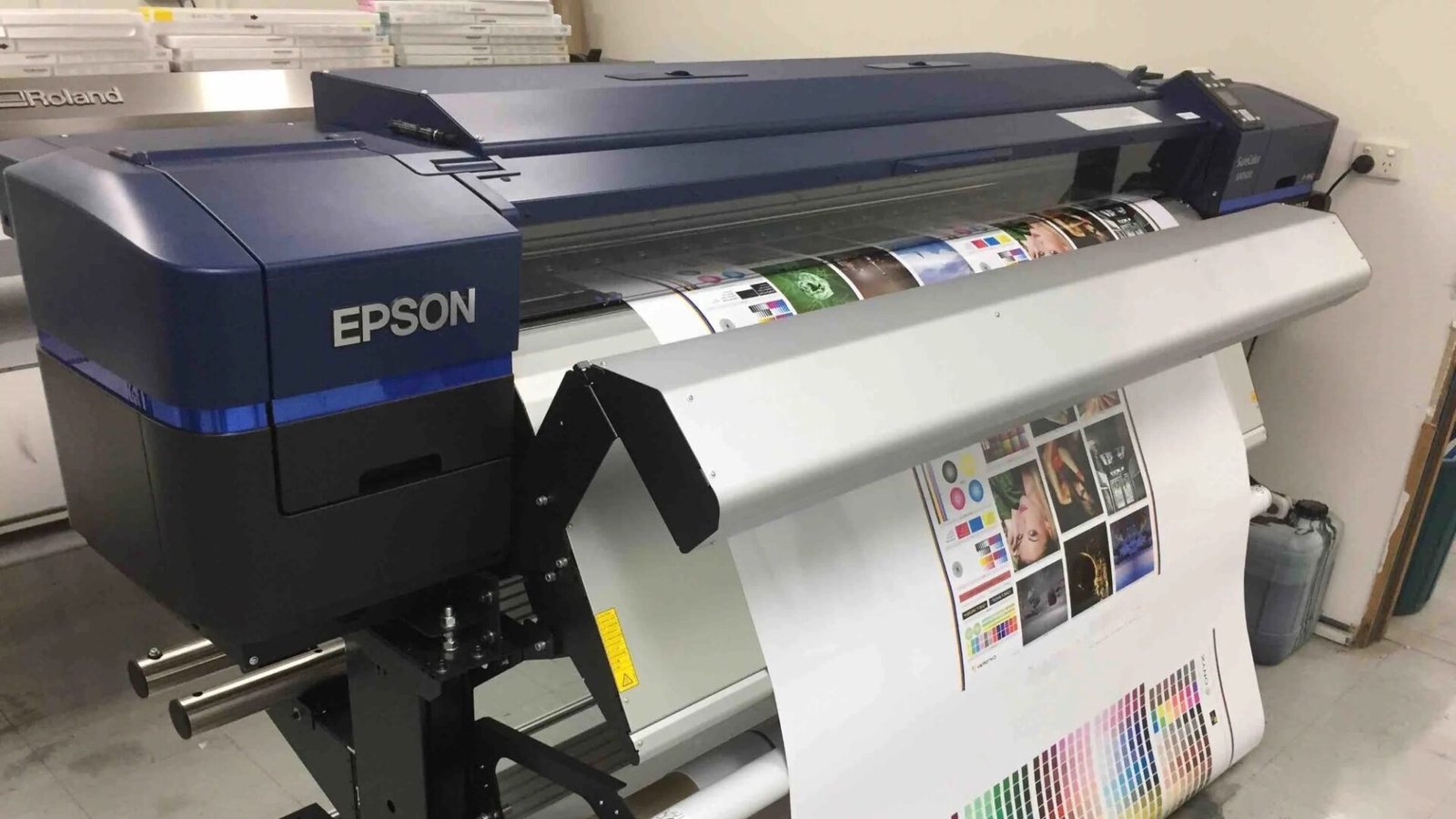
When a $20,000 printer turns into a giant paperweight because the manufacturer will not let you fix it, something is off. That is what Epson right to repair looks like from my shop in California.
We own an Epson SureColor S80600, a 64 inch solvent printer that is supposed to be a workhorse for signs, wraps, and large format jobs. Epson quoted us around $13,000 to repair it. On top of that, they refused to give us the basic tools, software, or service manuals we would need to handle repairs ourselves or hire an independent tech.
This is not our first bill. Only a few months before, we paid about $9,000 for Epson to come out and repair the same machine. So now we have a roughly $20,000 printer, plus $9,000 sunk into a recent repair, and we are staring at another five‑figure repair quote with zero real repair options.
We live in California, which likes to call itself a right to repair state. That sounds great on paper. In practice, the way Epson has handled our S80600 is, in my opinion, flat‑out anti consumer, even if some lawyer can argue they are technically inside the law.
I am not an attorney. This is my experience as a small business owner and my best understanding of the law. If you are considering legal action, talk to a lawyer. But if you are considering a big Epson printer, you should probably read this first.
Our Epson SureColor S80600 nightmare
The Epson SureColor S80600 is not a cheap desktop printer. It is a 64 inch roll‑to‑roll signage printer with an MSRP around $25,945, built for “high quality production environments” and professional sign work. It is sold with ten‑color solvent ink, fancy media handling, and all the usual marketing promises. Epson
In real life, this is what it looked like for us:
- We invested in the S80600 as a core production machine.
- It failed badly. Jobs stopped. Clients waited.
- We paid about $9,000 to have Epson come out and repair it.
- A few months later, it failed again.
When we called Epson, the answer was basically: pay another $13,000 or live with a dead printer. That is already brutal. But the part that really set me off was everything they refused to do.
We asked for:
- Service manuals
- Diagnostic and maintenance software
- Any official way for a qualified independent tech to work on the machine
We got none of that. We were told they would not provide the tools or software. They would not share the service manuals. The only real option on the table was their very expensive repair, done on their terms, at their price.
We spent multiple calls, each over an hour, being bounced around. No one would budge. No one said “here is how your local tech can get licensed” or “here is the paid manual” or anything like that. Just a wall.
At that point it did not feel like we owned a printer. It felt like we were renting Epson’s permission for our machine to work, and that permission could be taken away unless we kept writing big checks.
What California right to repair law actually says
California’s Right to Repair Act (SB 244) took effect on July 1, 2024. On its face, it sounds exactly like what we need. The official advisory from the Bureau of Household Goods and Services (BHGS) says the law is meant to create a fair repair marketplace for electronic and appliance products and to stop manufacturers from making third‑party repair harder than it has to be. Bureau of Household Goods and Services+1
Under SB 244, a product is covered if:
- It is an “electronic or appliance product” under California law.
- It was manufactured and first sold or used in California on or after July 1, 2021.
- Its wholesale cost is at least $50. Bureau of Household Goods and Services
If the product qualifies, the manufacturer has to make three big things available on “fair and reasonable terms”:
- Documentation, like service manuals and diagrams
- Parts
- Tools, including software tools needed to diagnose, maintain, or repair
For products with a wholesale price of $100 or more, those materials must be available for at least seven years after the last date that model was manufactured. Documentation has to be provided without charge. Software tools have to be made available without charge too, at least in digital form. Bureau of Household Goods and Services
The law also makes it clear this is not just a warranty issue. Manufacturers must provide parts, tools, and documentation even if there is no warranty or the warranty has expired. LegiScan
So on paper, right to repair in California sounds strong. If you own a covered product, you are supposed to have a real path to repair it, using the same information and tools that “authorized” shops get.
Does a wide format Epson printer count as a “covered product”?
Here is where things get muddy.
SB 244 relies on another law for the definition of what counts as an “electronic set” or “appliance.” In the Business and Professions Code, an “electronic set” includes things like televisions, video recorders, video cameras, video games, video monitors, computer systems, photocopiers, and fax machines. But there is a catch. They have to be “normally used or sold for personal, family, household, or home office use.” Justia Law
Same story for “appliance” or “major home appliance.” The law is clearly thinking about residential gear. Fridges, washers, dryers, dishwashers, microwaves, and so on. Again, it uses the same “personal, family, household, or home office use” language. Justia Law
Our Epson S80600 is none of that. It is a 64 inch solvent signage printer, marketed for professional sign and graphics shops. Epson’s own site frames it as a production machine, not something you put in a spare bedroom. Epson
BHGS also lists a long set of excluded categories, including industrial and other heavy “equipment.” While wide format printers are not named, the idea is pretty clear. SB 244 is focused on consumer electronics and household appliances, not every big piece of commercial gear a business might buy. Bureau of Household Goods and Services
So here is the likely reality:
- Your home office Epson or HP printer may be covered.
- A giant wide format Epson S80600 used in a sign shop probably sits outside the clean “home” definitions.
That gives companies like Epson plenty of room to say “we are not required under SB 244 to give you anything for this model,” even when the whole right to repair movement was created to fight this exact dynamic.
Why Epson’s behavior is anti consumer even if it is legal
Even if Epson’s lawyers can thread the needle and argue that the S80600 is not a “covered product,” what they are doing is still, in my opinion, anti consumer and anti small business.
Here is why.
First, they are using control of information as a weapon. We are not asking for free parts. We are asking for the basic service manuals and diagnostic software so we can either train on the machine or hire a qualified independent tech. Blocking that is about protecting a monopoly, not about safety or quality.
Second, they are using price pressure to corner you. A roughly $13,000 repair quote on a roughly $20,000 printer, only months after a $9,000 repair, is not a simple “cost of doing business.” It is leverage. You either pay, replace the whole printer, or sit on a dead asset.
Third, there is a pattern. This is not just one angry shop ranting on the internet.
Epson has already faced heavy criticism for bricking home printers when an internal “ink pad” counter decides the pads have reached the end of their service life. Owners see an error message and a working device that simply will not print, even though the problem can often be fixed with basic maintenance. Reports describe this as a classic planned obsolescence scenario that pushes people to buy a new Epson printer or send the old one in instead of doing a simple DIY fix. The Verge
On the S80600 product page, Epson states that the printer is “designed for use with Epson cartridges only, not third‑party cartridges or ink.” Combined with service lock‑in, that is a double lock. You are locked into their ink and into their service at the same time. Epson
If you look at resellers, you can also see how expensive Epson’s preferred service model can get. Some dealers list multi‑year “Preferred Plus Next‑Business‑Day On‑Site Repair” plans for the S80600 that run into several thousand dollars for a few years of coverage. In some listings, a four‑year service plan is well into five figures. IT Supplies
Put all of that together and it looks like this:
- Epson keeps critical tools and manuals behind a wall.
- Epson pushes you to buy expensive extended service plans.
- Epson pushes you to stick with Epson ink only.
- If you fall outside those channels, your very expensive printer is at risk of becoming a brick.
To me, that is textbook anti consumer behavior. The fact that it targets small businesses and not just home users does not make it better. It makes it worse.
Legal teeth: what the law can actually do
SB 244 does have teeth, at least for products that clearly qualify.
If a covered product is involved and a manufacturer refuses to supply parts, tools, or documentation on fair and reasonable terms, the law lets a city, county, or the state itself sue in superior court. Courts can impose daily civil penalties per violation that go up with repeat offenses. LegiScan+1
But there are two big limits:
- SB 244 does not clearly give you a personal right to sue just for a violation of the act. You may need a public agency to care enough to take it on.
- Coverage hinges on those “normally used or sold for personal, family, household, or home office use” definitions. Large industrial or pro‑only devices can slip through. Justia Law
Separate from California law, there is also federal pressure building around right to repair. In July 2024, the Federal Trade Commission sent warning letters to several companies for warranty practices that blocked consumers from using independent repair or non‑brand parts. The FTC made it clear that tying a warranty to use of only branded parts or certain service providers can violate federal warranty law. Federal Trade Commission
I have not seen Epson’s current S80600 warranty language tested in that way, so I will not claim they are violating it. But the general direction is clear. Regulators are losing patience with companies that hide behind fine print to shut down repair.
For now though, a small print shop with a wide format Epson is mostly stuck in the gray zone.
What small print shops in California can do
If you are in a similar spot, here are the practical steps I would take or recommend. None of this is legal advice, just one shop owner talking to another.
- Document everything
Keep emails, call notes, quotes, and any written refusal to provide manuals, software, or parts. Dates, names, and dollar amounts matter. - Check if your product might be covered
If you are dealing with something closer to a home office or “prosumer” device, like a smaller printer or other electronics that could reasonably be used in a household, it may fall inside SB 244’s definitions. If it was first sold or used in California on or after July 1, 2021 and the wholesale cost was at least $50, the law may apply. Bureau of Household Goods and Services - Ask the manufacturer in writing
Send a short written request that cites California’s Right to Repair Act. Ask for:- Service documentation in digital form
- Any diagnostic or calibration tools used by their own techs
- Information on buying parts at the same terms given to authorized providers
- File complaints when you are stonewalled
- File a complaint with the California Bureau of Household Goods and Services. They are the agency that oversees this area and publish guidance on the Right to Repair Act. Bureau of Household Goods and Services
- If your product looks like a covered consumer device and you are still blocked, a complaint might help push action.
- Talk to a lawyer if the money is big
For five‑figure repair bills or repeated failures, it is worth at least a consult with a California attorney who knows consumer and small business law. They can look at warranty claims, unfair business practice claims, or other angles that go beyond SB 244. Recyclemore - Change how you buy equipment
Before you sign off on the next big printer or cutter:- Ask whether service manuals are public.
- Ask whether independent techs can buy parts and access software tools.
- Look at brands that are at least somewhat friendly to right to repair instead of locking everything down.
For us, this experience means one thing: we will avoid Epson for large format equipment going forward. I cannot justify spending this kind of money with a company that holds our production hostage.
Why right to repair must cover professional gear too
SB 244 is a big win for consumers. It covers phones, laptops, TVs, home printers, and many household appliances. That is a huge step forward, and I do not want to minimize that. Bureau of Household Goods and Services
But small businesses sit in an awkward middle ground.
A wide format printer is not a fridge or a laptop, but for a sign shop it plays the same role. It is essential infrastructure. When it goes down, you cannot work. You miss deadlines, lose contracts, and burn through cash while a perfectly good machine sits idle, blocked by software and policy.
Legal analysis of SB 244 points out that it is aimed at consumer electronics and appliances, and that there are still open questions and gaps in how it will be applied. There is no clear path yet that brings every professional machine with embedded electronics into the same right to repair world. Carter Ledyard & Milburn LLP
In my opinion, that needs to change.
If a device costs tens of thousands of dollars and is useless without a manufacturer’s blessing, owners deserve some basic rights:
- To buy parts at fair prices
- To access service manuals
- To run the same diagnostic tools the manufacturer’s techs use
Whether the device is in a living room or a small shop should not matter that much.
Final thoughts on Epson and right to repair
Our story is simple:
- We bought an expensive Epson S80600.
- We paid Epson a lot of money to repair it.
- It failed again.
- Epson refused to give us manuals, software, or tools.
- They offered a repair that cost more than half the value of the machine.
Maybe someone in a suit can argue that this sits outside California’s Right to Repair Act. Maybe. But even if that argument holds, the result is the same. A small business gets trapped. A piece of perfectly good hardware inches closer to the landfill. One company keeps total control.
To me, that is anti consumer, anti small business, and anti environment.
If you are a shop owner who is thinking about a large format Epson, I would urge you to factor this in. Ask hard questions about service access before you buy. Look at competitors. Think about what happens when the machine is out of warranty and something expensive breaks.
And if you are a lawmaker or advocate, please look at what happens at the edge of the current law. SB 244 is a strong start. But until right to repair clearly covers professional gear like the S80600, companies will keep hiding behind that gap while the rest of us pay the price.
References
California Bureau of Household Goods and Services, “Right to Repair Act Industry Advisory,” June 15, 2024, explaining coverage of electronic and appliance products, price thresholds, time periods for parts, tools, and documentation, and exclusions such as industrial equipment. Bureau of Household Goods and Services
BHGS, “The Right to Repair Act: A Consumer Guide,” summarizing the requirement that covered products be manufactured and sold or used in California on or after July 1, 2021, and that electronics and appliances with a wholesale cost of $100 or more receive seven years of repair material availability. Bureau of Household Goods and Services
California Business and Professions Code § 9801, defining “electronic set” and “appliance” as products like televisions, computer systems, photocopiers, and major home appliances that are normally used or sold for personal, family, household, or home office use. Justia Law
California SB 244 bill text, “Right to Repair Act,” stating the Legislature’s intent to prevent intentional barriers to third party repair, requiring manufacturers of covered products to provide documentation, parts, and tools on fair and reasonable terms, and authorizing cities, counties, and the state to seek daily civil penalties for violations. LegiScan
Carter Ledyard & Milburn LLP, “Digital Right to Repair Expands to Influential State of California,” January 19, 2024, analyzing SB 244, its focus on consumer electronic and appliance products, definitions that reference Business and Professions Code § 9801, and the enforcement structure. Carter Ledyard & Milburn LLP
Epson, “Epson SureColor S80600 Printer” product page, showing the S80600 as a 64 inch roll‑to‑roll solvent signage printer with an MSRP around $25,945 and stating that it is designed for use with Epson cartridges only, not third party cartridges or ink. Epson
IT Supplies, “Epson SureColor S80600 Print and Cut Bundle 64″ Solvent Printer,” describing the S80600 as a 64 inch solvent printer for signage and listing high‑priced multi‑year on‑site repair plans for the S80600 series. IT Supplies
Jess Weatherbed, “Bricked Epson printers make a strong case for user repairability,” The Verge, August 11, 2022, detailing how Epson consumer printers stop working due to an ink pad end‑of‑service error, leading to accusations of planned obsolescence and highlighting the role of right to repair. The Verge
Federal Trade Commission, “FTC Warns Companies to Stop Warranty Practices That Harm Consumers’ Right to Repair,” July 3, 2024, describing warning letters to companies whose warranty terms restricted independent repair or non‑brand parts under the Magnuson‑Moss Warranty Act. Federal Trade Commission
BHGS website and public materials explaining the role of the Bureau in overseeing electronic and appliance repair dealers, right to repair enforcement, and complaint processes for California consumers. Bureau of Household Goods and Services