
If you hang around printers long enough, you hear this question a lot: what is the real difference between a decal vs sticker? Some shops treat the words like they mean two completely different products. Others throw them around like they are the same thing.
From what I see testing print products for PrintReviewer, the answer is messy. There are patterns in how the trade uses these words, but no single official rule. This guide walks through how most manufacturers use “decal” and “sticker” today, how they’re built, and how to pick the right one for your project without overthinking the label on the product page.
Decal vs sticker: how printers actually use the words
There’s no global standards body that says “this is a sticker” and “that is a decal.” Different vendors draw the line in different places, which is part of why buyers get confused. Some brands even admit that searches for “sticker vs decal” don’t clear things up at all.
That said, there are common themes.
- Sticker usually means a peel-and-stick product where the graphic and adhesive are on a single face material with a backing you throw away. It can be paper, polypropylene, vinyl, or another film.
- Decal more often refers to a vinyl graphic that’s moved from a backing onto the surface with the help of a transfer layer. After installation, you see only the letters or shapes, not a printed rectangle.
Printers also use the words to signal use case:
- “Stickers” are commonly promoted for laptops, water bottles, packaging labels, and promotional handouts.
- “Decals” show up more for vehicles, storefront windows, wall graphics, and signage where size and durability matter more.
The catch is that many vinyl decals are technically a type of sticker. So when you see “vinyl decal,” you’re really looking at a specific construction and application method inside the bigger sticker world.
Materials and construction: vinyl decal vs paper or vinyl sticker
To make sense of decal vs sticker, it helps to look at how they’re built.
Most stickers have two layers:
- A face material with the printed design and adhesive
- A release liner or backing sheet
You peel the face away from the liner and stick it on your surface. That’s it. The face can be cheap paper for short-term indoor use or a thicker vinyl or BOPP film for more durable stickers and labels. Paper stickers are really meant for short runs and indoor use, while vinyl stickers offer better water and abrasion resistance.
A classic vinyl decal usually has three layers:
- A backing paper
- A vinyl graphic that has been cut to shape, with the unwanted background weeded out
- A clear or paper transfer tape on top
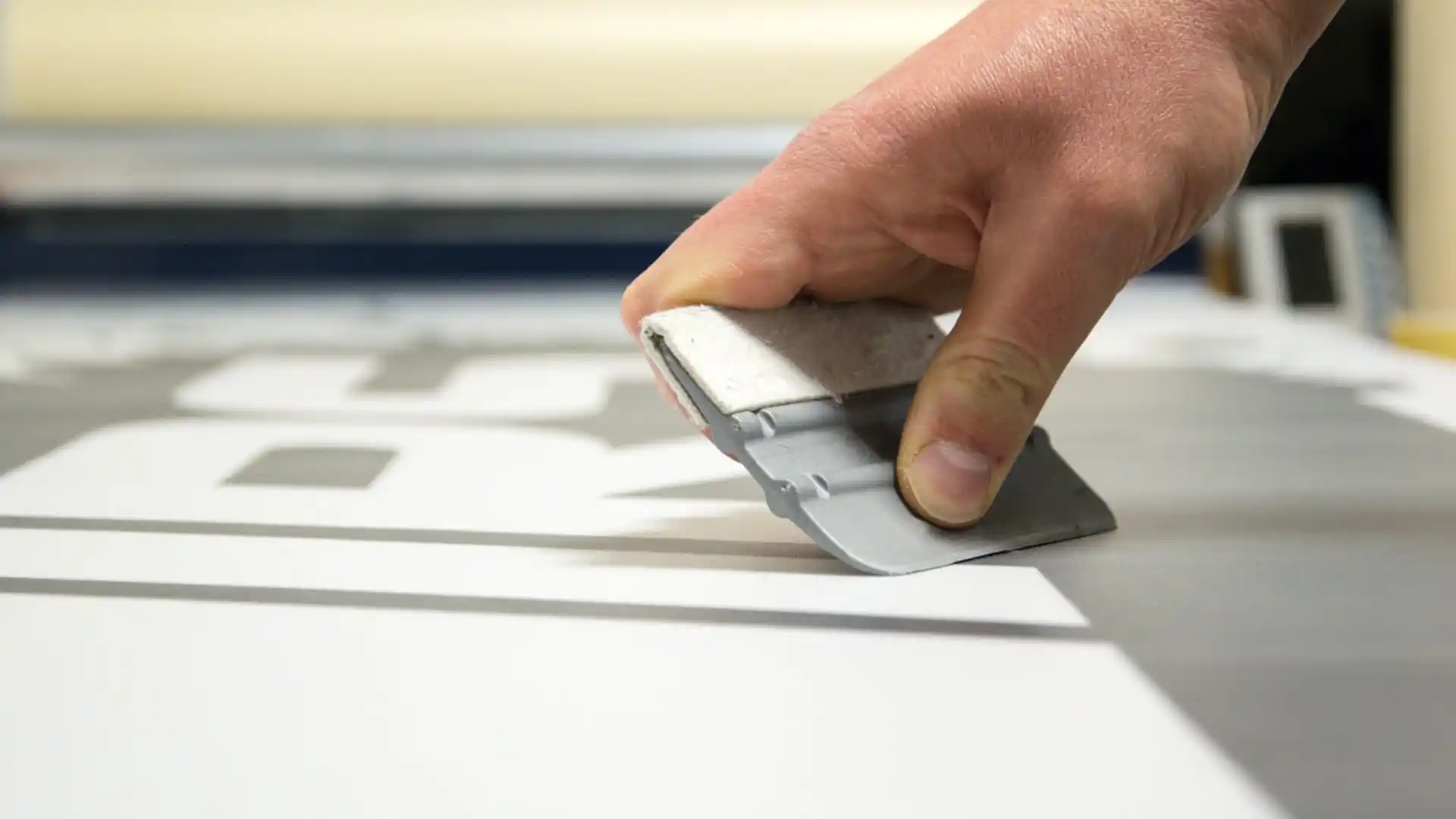
You peel the backing, position the decal using the transfer tape, squeegee it onto the surface, then peel away the tape so only the vinyl letters or shapes remain. Many manufacturers describe decals this way: a three-layer sandwich with a transfer film that lets you move complex shapes in one shot.
There are also printed decals, which blur the line even more. These may look like stickers at first glance but are sold as decals because of size, intended use, or transfer style. Some shops reserve “decal” for large window graphics and car graphics, even if they’re printed instead of cut from solid-color vinyl.
So in construction terms:
- Two layers and peel-and-stick usually points toward “sticker”
- Three layers with transfer tape points toward “decal”
Durability and environment: indoor stickers vs outdoor decals
A lot of people talk about decal vs sticker like the main difference is durability. That’s partly true, but only because of how these products are usually specified.
Decals are often promoted for harsher environments. Automotive and window decal products typically use outdoor-rated vinyl films with UV-resistant inks and protective laminates. High-end decal films can survive several years of sun, rain, and abrasion when applied correctly.
Stickers cover a wider range:
- Paper stickers are cheap and fine for boxes, envelopes, and indoor promos
- Vinyl stickers with laminate can be just as tough as many decals and will survive on cars, water bottles, helmets, and gear for years if they’re built that way
So durability is less about the word on the product page and more about three things you should check in the specs:
- Face material: paper, BOPP, vinyl, or polyester
- Lamination: yes or no, and what kind
- Outdoor rating: how many months or years the printer claims in the sun and weather
That’s what we look at when we score sticker and decal products at PrintReviewer, because “sticker” in one shop might be tougher than “decal” in another.
Application, removal, and the look after install
Another useful way to think about decal vs sticker is how they go on and what they look like once they’re in place.
Stickers
- Peel from the liner and stick
- Easy for anyone to apply without tools
- Great for small items, labels, quick giveaways, and anything where a visible border or shape around the design is fine
You can get kiss-cut or die-cut stickers that follow the shape of your art, but you still see the sticker shape or clear border. For most branding uses, that’s totally fine.
Decals
- Usually need a squeegee or at least a credit card and some patience
- Transfer tape keeps all the pieces aligned so you can install detailed lettering or logos as one piece
- Once applied, only the vinyl graphic remains, which gives a very clean, “painted on” look
Because of this, decals are often preferred for:
- Door and window lettering
- Vehicle numbers and logos
- Wall quotes and large interior graphics
Removal is also a bit different. High-quality vinyl stickers and decals will both leave some adhesive behind if they’ve been on a surface for years, but in general:
- Paper stickers tear when you pull them, which can make removal annoying
- Vinyl stickers and decals peel more cleanly, especially if you warm them slightly first
Again, this is about material and adhesive type more than the name.
Which should you order: decal vs sticker for real projects
So where does this leave you when you’re actually trying to order something? Here’s a simple way to frame it.
If you care about small items, handouts, or labels, you’re almost always fine choosing a high-quality vinyl sticker:
- Laptop branding
- Water bottles and tumblers
- Product labels
- Event giveaways and merch
Look for laminated vinyl or BOPP, not paper, if the item will see water or heavy handling.
If you care about large graphics and a super clean edge, look at decals or at least decal-style products:
- Vehicle graphics, racing numbers, and fleet logos
- Storefront and office window lettering
- Wall quotes and big decorative graphics
- Floor arrows and directional graphics, if they’re sold as floor decals
You may see products named “car stickers” or “window stickers” that are really decals in disguise. Read the product description. If it mentions transfer tape, vinyl lettering, or three-layer construction, you’re effectively buying a decal even if the listing says sticker.
If you’re comparing two vendors side by side, worry less about what they call the product and more about:
- Material and laminate
- Outdoor rating
- Minimum size and maximum size
- Whether they ship it as individual pieces, on a sheet, or on a roll
That’s how we score products during our reviews on PrintReviewer, and it maps more cleanly to real-world performance than the sticker vs decal label.
Quick recap
If you only remember a few points from this decal vs sticker breakdown, keep these in mind:
- “Sticker” usually means a two-layer peel-and-stick product. “Decal” usually involves a vinyl graphic and transfer tape.
- Durability depends on material, laminate, and adhesive, not the word printed on the box.
- Stickers shine for small items and labels. Decals shine for larger graphics, windows, cars, and walls where you want a clean, cut-vinyl look.
- When in doubt, read the material specs and outdoor rating instead of getting hung up on the name.
That way, you can order with confidence, even when a site uses “decal” and “sticker” in the same sentence.