
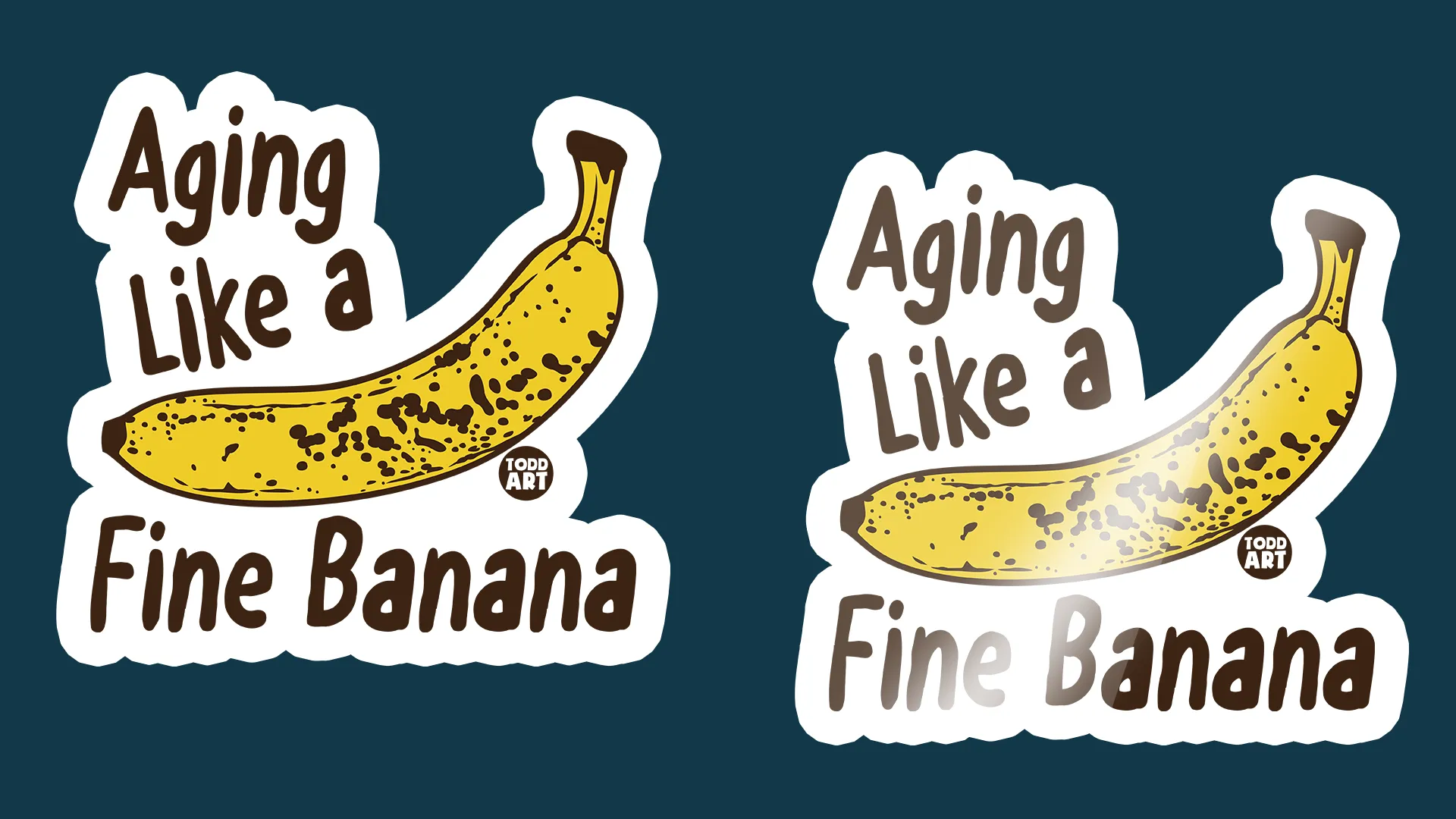
If you have ever stared at an online proof and flipped between matte vs glossy stickers for ten minutes, you are not alone. The design is done, the size is locked, the cart is full, and somehow this tiny finish choice feels like it could ruin everything.
The good news is that matte vs glossy stickers is not a mystical art decision. It is mostly about light, texture, and where the sticker will actually live. Once you think about those three things, the choice usually falls into place.
Here is a simple breakdown of how each finish looks, feels, and holds up, plus some quick rules of thumb so you can finally hit “order.”
What “matte vs glossy stickers” actually means
Most modern custom stickers use the same basic construction:
- A face material, often white vinyl or BOPP
- Ink printed on top
- A clear laminate film that protects the print
Matte vs glossy is almost always a question of that top laminate. The base vinyl and adhesive can be identical. The printer simply applies a matte laminate film or a glossy laminate film on top.
So you are not choosing between “durable” and “fragile.” With good vinyl, both finishes are waterproof and built for daily abuse. You are choosing how the surface handles light, color, fingerprints, and scratches.
How matte and glossy stickers look
Color and contrast
Glossy stickers usually look brighter and more saturated. Light hits the shiny laminate, bounces back, and makes colors pop. Bold logos, cartoon art, and high contrast designs often feel more energetic on gloss.
Matte stickers go the other way. The surface diffuses light, so colors look a bit softer and more muted. The tradeoff is that the overall effect often feels more “premium” or understated, which is why you see matte finishes on a lot of boutique packaging and upscale product labels.
Glare and readability
Glossy stickers reflect light. On a water bottle in the sun or under a bright retail spotlight, you can get visible glare across the design. Sometimes that flash is exactly what you want for an attention grabbing promo. But it can make small text or fine detail harder to read from some angles.
Matte finishes are low glare. They scatter light instead of reflecting it straight back at you, which makes them easier to read in mixed or harsh lighting. If your sticker has fine print, QR codes, ingredient lists, or any dense layout, matte is usually the safer choice.
Texture and fingerprints
Glossy stickers feel slick and glassy. They wipe clean easily, but smudges and fingerprints can show more clearly, especially on dark, empty areas of color.
Matte stickers feel smoother and more “paper like” even when they are printed on vinyl. They hide fingerprints, dust, and tiny surface scratches better than gloss, which is handy for things that get handled often or tossed into bags with keys and other gear.
Durability, moisture, and cleaning
On decent laminated vinyl, both matte and glossy stickers are tough:
- Both are typically rated for years of outdoor use
- Both are scratch resistant
- Both are waterproof when laminated properly
Some printers and label makers say glossy laminate has a slight edge for moisture and stain resistance. The slick surface tends to shed water, oil, and dirt easily, which is helpful on things like shower products or heavily used drinkware.
Matte laminate can be a little more prone to visible scuffs or stains in rough environments, although modern films close that gap quite a bit. In real life, with good materials, the bigger difference you will notice day to day is glare and feel, not raw durability.
When matte stickers are the better call
Choose matte stickers if one or more of these sounds like you.
Your design is text heavy
Ingredient lists, instructions, serial numbers, address labels, and compliance info all benefit from low glare. If your sticker has more fine print than a phone contract, matte keeps it readable.
You want a premium, minimal look
Matte finishes lean toward “quiet” on the shelf. They work well for:
- Cosmetics and skincare
- Small batch food and beverage labels
- Stationery brands
- Simple tech branding and clean logos
That soft, non reflective surface feels more intentional than a generic shiny label.
You hate reflections in photos
If you plan to photograph your products a lot, matte finishes are friendlier to cameras and phone flashes. You will spend less time fighting white streaks of reflected light across your logo.
You want to write on the sticker
Matte surfaces usually play nicer with pens and permanent markers, especially on paper stock or unlaminated indoor labels. Even on laminated vinyl, matte is usually a better bet for write-on areas than high gloss (though you should still test your pen and let it fully dry).
When glossy stickers make more sense
Gloss has its own clear wins.
You want maximum color punch
If the whole point of the sticker is to be loud, glossy is your friend. Bright logos, cartoon art, gradients, and high contrast photography tend to look more vivid and “finished” with a glossy topcoat.
The sticker will live in wet or dirty environments
Think:
- Water bottles and coolers
- Skis and snowboards
- Outdoor gear
- Car windows and bumpers
Here you want something that shrugs off rain, snow, condensation, sunscreen, and fingerprints. Matte and glossy stickers are both fine on good laminated vinyl, but gloss is slightly easier to wipe clean and keep looking “new.”
You are doing loud promo or event stickers
Handouts at conventions, band stickers, laptop and case decals for fans. In those situations, subtlety is not the goal. A glossy finish gives you the same kind of punch as a coated postcard or a magazine cover.
Matte vs glossy stickers on clear material
Things shift a bit on clear stickers.
- Clear glossy stickers look like printed ink floating on glass. The material nearly disappears on smooth surfaces like windows or bottles.
- Clear matte stickers create more of a frosted effect. They are still translucent, but the matte topcoat diffuses light and slightly clouds whatever is behind the sticker.
If you want a “no label” look, clear gloss is usually better. If you want a frosted window or a soft overlay on the surface, clear matte can look great.
Price and availability
For many print shops, matte and gloss vinyl stickers are priced the same. Sometimes matte costs a little more because the laminate film is more expensive or less common in certain roll formats, but the difference is usually minor.
So you usually do not pick between matte vs glossy stickers on price alone. You pick based on use case, then check that your chosen vendor stocks that finish in the size and format you need.
Quick decision guide
If you just want a rule of thumb, here is the short version.
Choose matte if:
- You care more about readability than shine
- You are going for a refined, minimal, or “craft” look
- The sticker will be photographed a lot
- You want to hide fingerprints and small scratches
Choose glossy if:
- You want bright, saturated color that stands out
- The sticker will live outdoors or in wet, messy places
- It is a promo or fan sticker where loud is good
- You want something that wipes clean quickly
When you are truly torn, ordering a small batch in each finish is not overkill. Seeing your own artwork in both matte and glossy beats any mockup, and most printers make it easy to do a small test run before you commit to a big order.