
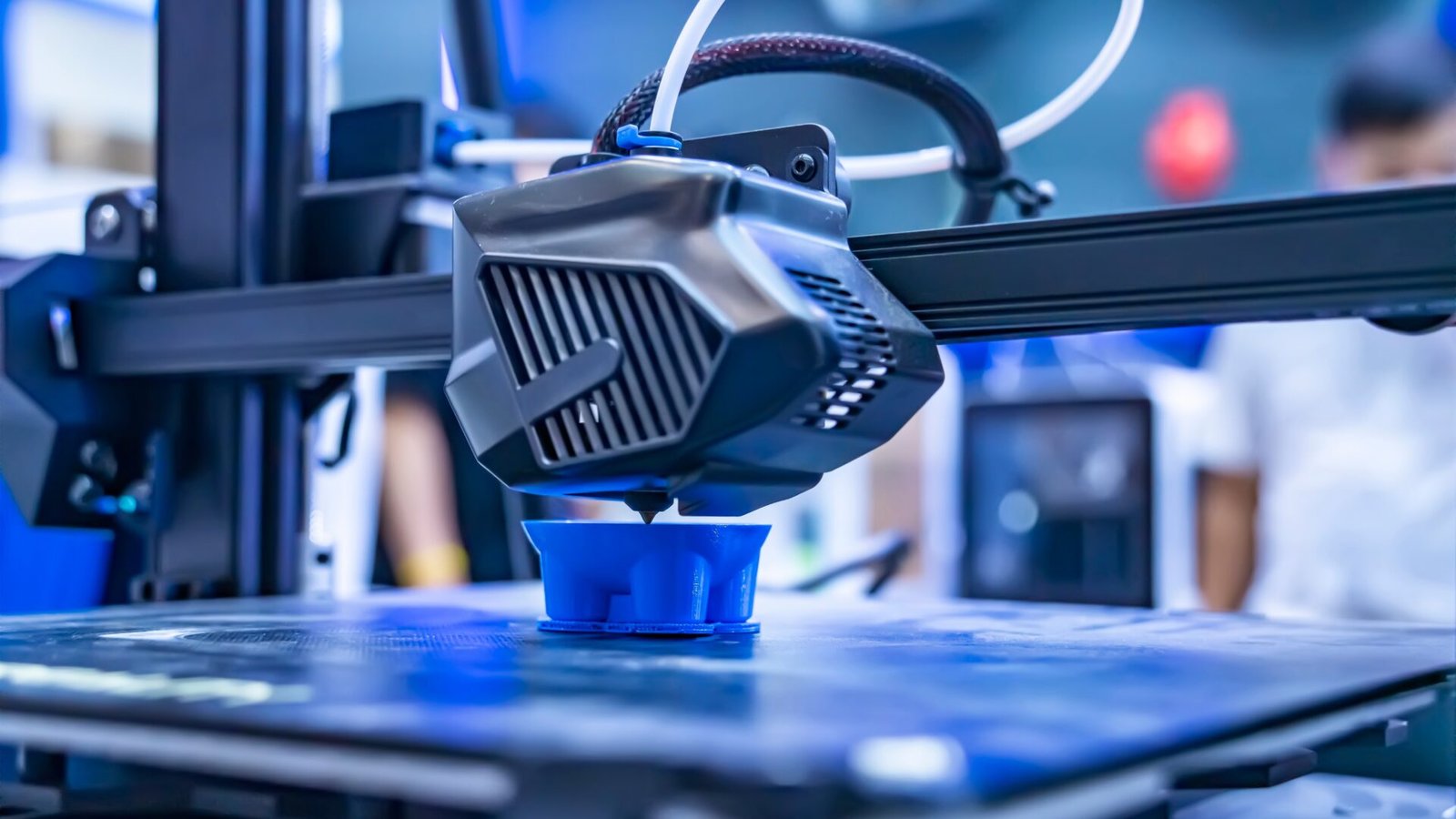
If you have ever printed ABS, you know the smell. That hot, sweet, “melted plastic” odor that fills the room and lingers. It is natural to wonder if that smell is just annoying or actually bad for you. And underneath that is the real question: do you need to vent ABS when 3D printing, or is an enclosure alone enough?
Short answer: you should plan on some form of ventilation or filtration any time you print ABS, especially if you print indoors, for long jobs, or around kids and pets. You do not have to turn your setup into a full industrial lab, but you should take the fumes seriously.
Let’s keep this simple and walk through why.
What is in ABS fumes?
ABS filament is made from acrylonitrile, butadiene, and styrene. When you heat it up to extrusion temperatures, it releases:
- Volatile organic compounds (VOCs), especially styrene
- Ultrafine particles (UFPs) – tiny plastic particles you cannot see
Styrene is not just a random smell. It is a known industrial chemical with documented health effects at higher concentrations, including headaches, fatigue, dizziness, and trouble concentrating. Long-term occupational exposure is regulated with strict workplace limits.
Even at home levels, users often report irritated eyes and throat, headaches, or feeling “off” after hours of ABS printing in a closed room. That is your body telling you the air is not great.
There are lab studies where controlled ABS printing only caused mild, temporary effects in test animals, which sounds reassuring. But those tests are carefully monitored, with known airflow and measured concentrations. Your spare bedroom or basement is not.
So, do you have to vent ABS?
From a safety point of view, the honest answer is: you should treat ventilation as essential, not optional.
Manufacturers and safety articles consistently recommend:
- Printing ABS in a well-ventilated room
- Using local exhaust (ducting outside) or a good fume extractor if possible
- Avoiding ABS in small, sealed spaces without airflow
Community experience lines up with this. Many people who tried “raw” ABS printing in a closed room say they got headaches, felt nauseous, or just noticed the smell building up. When they switched to vented enclosures or ducting outside, those symptoms went away.
So while you might get away with short ABS prints in a big open garage, printing ABS for hours in a closed office with no vent is not a smart long-term plan.
What counts as “venting” for ABS?
You do not need a full industrial system, but you do want some way to get fumes out of your breathing zone. Roughly, your options look like this:
Basic: general room ventilation
- Open windows on opposite sides of the room
- Run an exhaust fan in a window or nearby bathroom
- Keep the printer as far from where you sit as you can
This is the bare minimum. It is better than nothing, but it also dumps fumes into the rest of the house while they slowly dilute.
Better: vented enclosure
- Put the printer in an enclosure
- Add a small inline fan and duct to a window, dryer vent, or wall vent
- Let the enclosure air flow out of the house, not back into the room
You do not need a huge fan. Just enough airflow so that when the door is closed and the fan is on, fresh air flows into the enclosure and out through the vent.
Also helpful: filtration
- A HEPA filter to catch particles
- An activated carbon filter to reduce VOCs like styrene
Filtration is great as a second layer, especially when you cannot easily vent outside. But filters alone are not magic. Carbon fills up, HEPA filters clog, and neither turns your office into a lab. When in doubt, use filters plus some fresh air.
But won’t venting ruin my ABS prints?
ABS likes warm, stable air. Hard drafts can cause layers to cool too fast and warp, crack, or split. That is why people often use enclosures in the first place.
The trick is to:
- Keep the draft away from the print
- Vent the enclosure or room as a whole, gently
For example:
- Enclosed printer, duct from the top or back of the enclosure to a window
- Low, steady fan speed so air changes over time without blasting the part
- Room window cracked and a small fan in another window pulling air out
You do not want a fan pointed straight at your ABS print. You do want a slow but steady way for polluted air to leave the space.
When should you skip ABS altogether?
There are situations where the real answer is: don’t print ABS there.
Consider avoiding ABS if:
- You live in a small apartment with no realistic way to vent outside
- You print near kids, pets, or people with asthma or lung issues
- Your printer runs long jobs overnight in a bedroom or shared space
In those cases, it is often smarter to use other materials (PLA, PETG, ASA in a better-vented setup) or move the printer to a garage or outbuilding where you can vent freely.
ABS is useful, strong, and heat resistant, but it is not worth risking your health or your family’s for a few parts.
Bottom line
Do you need to vent ABS when 3D printing?
If you care about your long-term health, the answer is effectively yes. At minimum, use good room ventilation. Even better, put the printer in an enclosure, vent it outside, and add filters if you can. Avoid direct drafts on the print, but don’t trap yourself in a sealed room full of ABS fumes either.
If you cannot do any of that safely, the simplest fix is to skip ABS and choose a safer filament for now.
References:
Purex International, “The dangers of ABS filament fumes,” explaining that ABS fumes can irritate and that rooms with ABS printers should be well ventilated or use fume extraction. purex.co.uk
Prusa Knowledge Base, “ABS,” recommending that ABS prints run in a well-ventilated room due to fumes that may pose a health risk, while warning against drafts directly on the print. Prusa Help
Alveo3D, “ABS plastic health risks in 3D printing,” detailing how heated ABS can release fumes that irritate eyes, throat, and respiratory system and may cause headaches, nausea, and dizziness. Alveo3D