
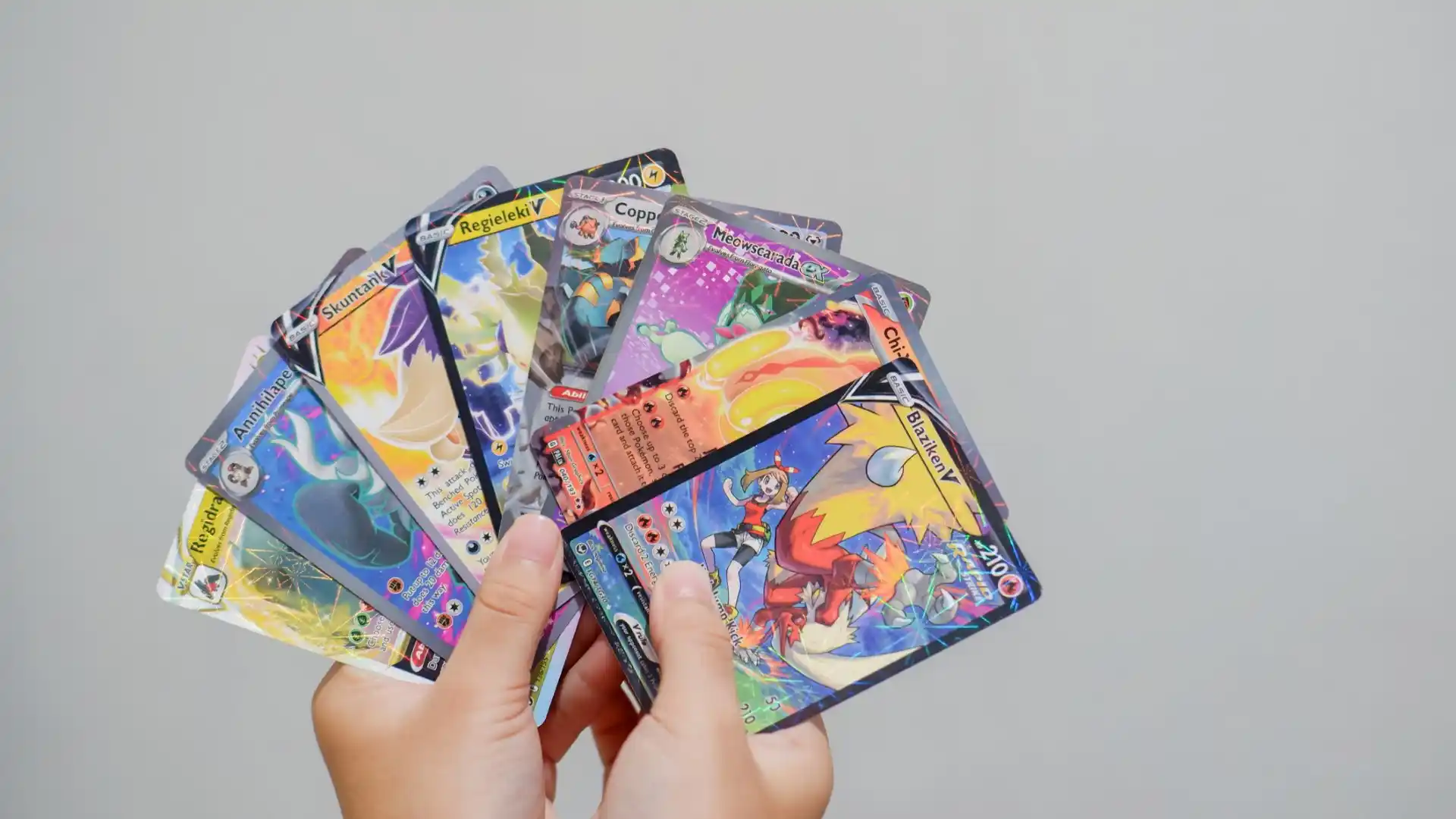
If you have ever opened a booster pack and noticed “Printed in the USA” or “Made in Belgium” on the wrapper, you are already seeing part of the answer. English Pokémon cards do not all come from a single factory. They are printed in a few major locations, mostly in the United States and the European Union, by specialist trading-card printers that work with The Pokémon Company International.
Below I’ll walk through the short answer, the main factories involved, how this changed over time, and how you can tell where your own cards were printed.
Short answer: the main places English Pokémon cards are printed
The official support site for The Pokémon Company International says that English, French, Italian, German, and Spanish Pokémon cards are printed either in the United States or in the European Union. Portuguese cards are printed in Brazil, while Japanese cards are printed in Japan. A product’s wrapper will always show its country of origin.
So when you ask “where are English Pokémon cards printed,” the basic answer is:
- In the United States
- In the European Union
Different products, print runs, and languages can be split between these regions depending on demand and logistics.

The big printing partners and factories
The Pokémon Company does not run every press itself. It relies on large commercial printers that specialize in game and trading cards.
One key player is Millennium Print Group (MPG). MPG is a trading-card manufacturer based in North Carolina and now owned by The Pokémon Company International. The company describes itself as a specialist in high-quality collectible sports and game cards, with facilities in North Carolina and the Netherlands. A 2025 business report notes that MPG has become the largest printer of Pokémon cards in the United States, operating multiple plants and large secure warehouses. An internal video released by Pokémon also highlights this partnership as the main production engine behind modern English cards.
Another important name is Cartamundi, a global card and board-game manufacturer headquartered in Turnhout, Belgium, with plants around the world, including Dallas, Texas. Wikipedia Reporting on the modern Pokémon print pipeline notes that Cartamundi handles much of the production for English-language cards and other non-Japanese releases outside Japan.
Put simply:
- A lot of English Pokémon cards are printed by Millennium Print Group in the US (and some EU work through its Dutch site).
- Cartamundi prints large volumes of Pokémon TCG cards for English and other languages from its European and US factories.
Those cards are then cut, packed, and shipped out to distributors and retailers worldwide.
Early days: Wizards of the Coast and multiple printers
Before The Pokémon Company International took over the English TCG directly, Wizards of the Coast (WotC) handled English releases from 1999 to the early 2000s. During that boom period, WotC spread printing across several commercial facilities to keep up with demand.
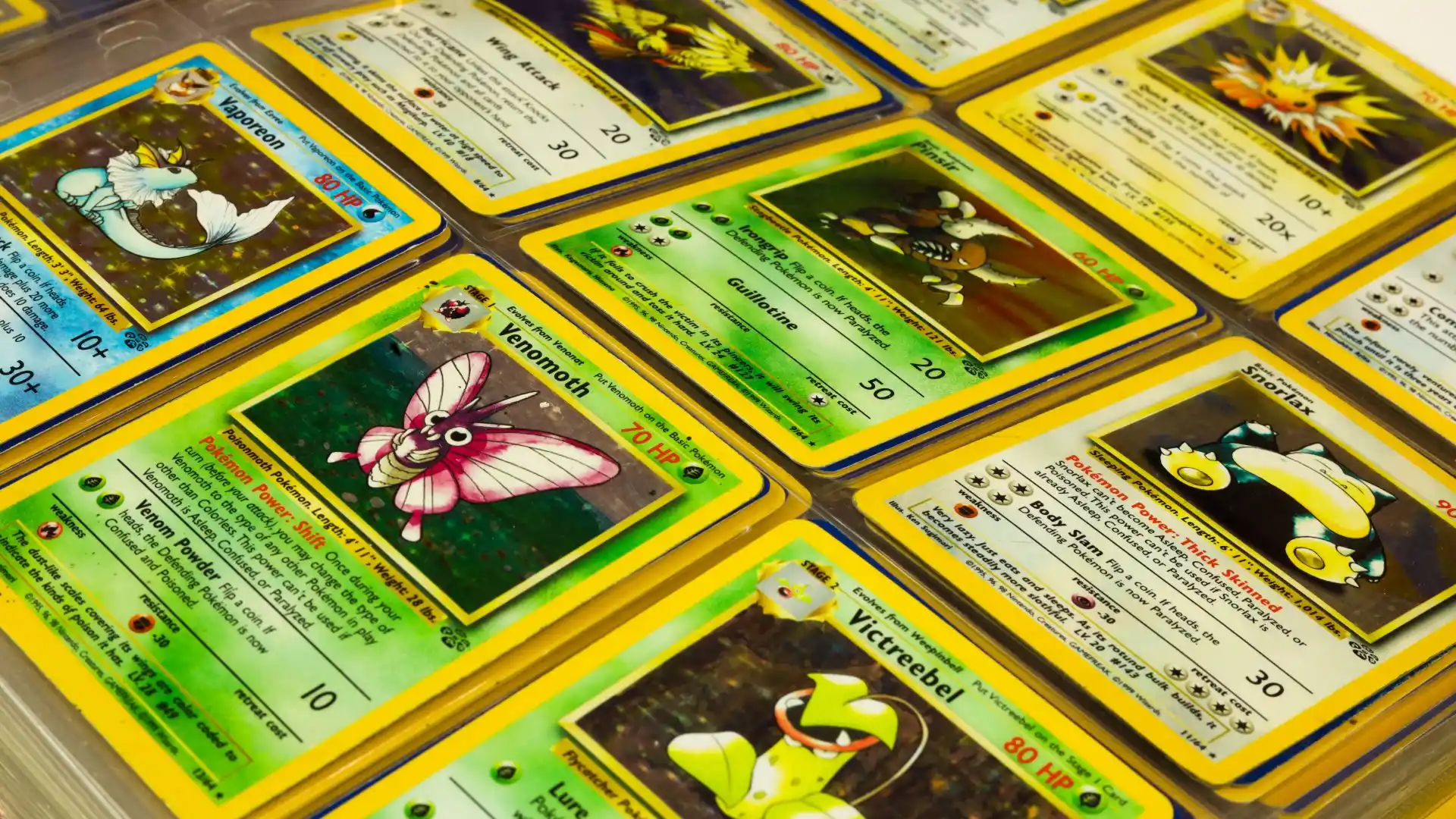
Collector research on uncut sheets and factory material shows that WotC used printers in the USA, Belgium, the UK, and Australia for different products and runs. That is why some early sets have noticeable variations in color, gloss, or card stock depending on which plant produced them.
So if you are holding a vintage Base Set or Jungle card, it may have come from more than one country, even if the card text is English.
How to check where your English cards were printed
If you want to know the specific origin of a sealed product or card, there are a few practical steps:
- Look at the wrapper or box
The easiest way is to read the fine print on the booster pack, Elite Trainer Box, or collection box. The official support page confirms that the product wrapping always lists the country of origin. Pokémon Support You will usually see “Printed in the USA,” “Printed in Belgium,” or another country line. - Check the outer case or display
If you have access to sealed booster boxes or retail displays, they may show where that batch was manufactured. Sellers sometimes mention this in listings when collectors care about print differences. - Notice known US vs EU differences
Collectors on forums have documented small differences between modern US and Belgium/EU prints. These can include texture, color saturation, and how foiling looks on some cards, especially in recent Scarlet & Violet sets. This is not an official marking, but it can be a clue when combined with packaging info. - Remember that singles often lose their context
Once a card is loose in a binder or top-loader, you usually cannot prove which factory made it unless there is a well-known tell for that set. For most players, it does not matter. For serious collectors, sealed product or documented pack opening is the only sure path.
Does print location change quality or value?
For gameplay, it usually does not matter where your English Pokémon cards were printed. They are designed to be compatible in tournaments no matter which factory produced them.
That said, collectors sometimes debate print quality by region:
- Some report that certain EU/Belgian prints have deeper colors or “cleaner” foiling compared with equivalent US runs for the same set.
- Others prefer US prints for consistency or simply because they are more common in their area.
These differences are subtle and can vary by set and batch. They rarely change official card value on their own. What really drives price is rarity, condition, and demand for the specific card.
Still, if you are very picky about print quality, paying attention to “Printed in …” on the box can help you choose the version you like best.
Summary
So, where are English Pokémon cards printed?
- Today, English Pokémon cards are printed mainly in the United States and the European Union, by large commercial partners like Millennium Print Group and Cartamundi.
- In the WotC era, printing was spread across multiple countries, including the USA, Belgium, the UK, and Australia, to meet massive demand.
- The exact country for any product is shown on the wrapper or box, which is the most reliable way to check where your cards came from.
If you just play the game, you can treat all English prints as equal. If you collect, knowing the print location adds another layer of detail to enjoy—and one more thing to hunt for when you pick up that next booster box.