
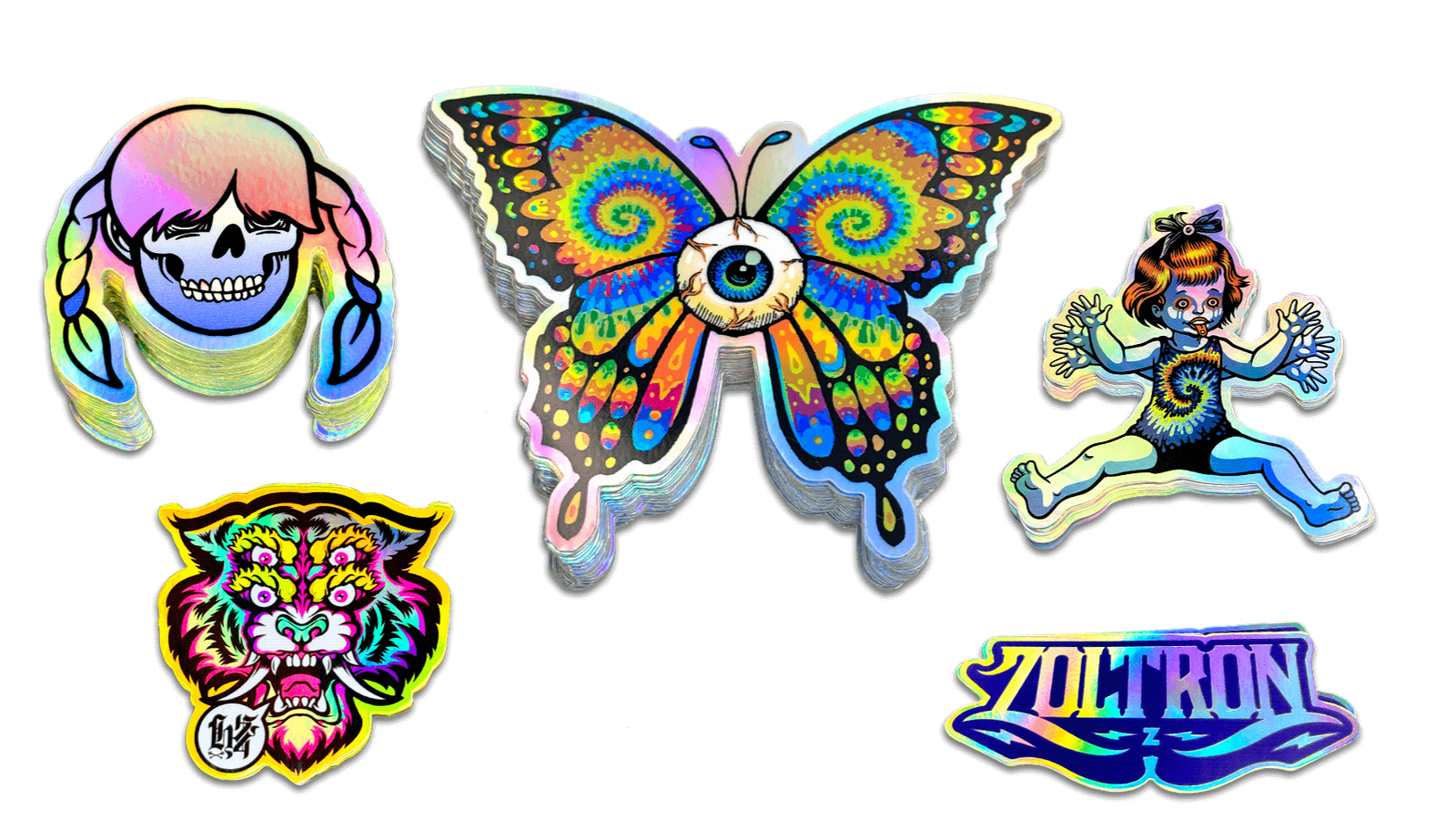
Stickerobot and StickerGuy both have strong reputations in sticker circles, but they serve very different needs.
Stickerobot is a premium shop that leans into ultra-durable silkscreen stickers and high-quality vinyl. They focus on outdoor performance and a very polished look, and they price and schedule production like a specialty shop.
StickerGuy is an old-school, screen-print vinyl shop that has been “the cheap band sticker place” for decades. They are built for simple, low-color designs in bulk, not for fancy color gradients or complex die cuts.
In this article, I’ll walk through how they compare on print method, color, durability, shapes, price, and turnaround. I’ll keep it objective so you can see where each company makes sense.
Who are Stickerobot and StickerGuy?
Stickerobot is a U.S.-based sticker printer that markets itself as a high-end, “built to outlast humans” sticker shop. Their whole brand leans into quality and outdoor durability. They offer both silkscreen and digital vinyl stickers, plus a few specialty formats and sample packs. Their site and marketing focus heavily on long-lasting, laminated vinyl and premium silkscreen ink.
StickerGuy is an independent vinyl sticker shop that has been around since the early 1990s. They are famous in punk, band, and DIY scenes. Their classic product is the cheap, screen-printed vinyl sticker you see on guitar cases, bathroom doors, and venue walls. The tone is casual and irreverent. They clearly aim at people who want a lot of stickers for not much money.
Both use screen printing at their core, but they sit at different ends of the market. Stickerobot is more “premium outdoor;” StickerGuy is more “bulk promo.”
Print methods and color capabilities
This is probably the biggest technical difference between the two.
Stickerobot print methods
Stickerobot offers two main options:
- Silkscreen stickers
- These are their flagship product.
- They use spot-color silkscreen printing with multiple ink passes, including several coats of UV-protective clear.
- The result is a thick, raised ink layer with a very glossy finish.
- It’s extremely durable and looks almost “enamel-like” in person.
- Digital vinyl stickers
- These are full-color CMYK digital prints with laminate.
- They are still waterproof and outdoor-rated, but the ink layer is thinner and looks more like other modern digital stickers.
- Turnaround is much faster than silkscreen.
Silkscreen is rare today because it is slower and more labor-intensive. It also has a limited color gamut. You pick a small number of spot colors. That’s perfect for flat-color logos and bold art. It is not ideal for photo-style designs, soft gradients, or complex illustrations with lots of subtle color shifts.
Stickerobot’s own copy and third-party reviews both underline this trade-off: silkscreen looks amazing for the right art, but it is more limited in color flexibility and more expensive.
StickerGuy print methods
StickerGuy is almost entirely screen-print vinyl as well, but aimed at simple, limited-color work:
- Their classic products are 1–4 spot-color designs on white or colored vinyl.
- The process is more like traditional band and skate stickers than modern digital CMYK printing.
This means:
- Simple logos, bold text, and flat graphics look good.
- Complex gradients, small details, and photo-like art do not.
StickerGuy has introduced some “bulk custom shape” options and various specialty vinyls, but they are still focused on spot-color screen printing, not full-color digital. In practice, you should think of them as a limited-color shop that shines when you only need a few colors.
Materials and durability
Both companies print on vinyl, but they position and use it differently.
Stickerobot materials and outdoor life
Stickerobot’s core promise is durable outdoor performance:
- Silkscreen stickers use thick layers of ink plus multiple coats of UV clear on vinyl.
- They market these as weatherproof, waterproof, “tsunami-proof,” with multi-year outdoor lifespans.
- Their digital vinyl stickers are also laminated and rated for several years outdoors, just not quite as extreme as silkscreen.
If you need stickers that can survive hard outdoor use—like on skis, boards, helmets, or industrial gear—Stickerobot’s silkscreen line is built for that.
StickerGuy materials and outdoor life
StickerGuy also uses vinyl and screen printing, which gives decent outdoor life by default:
- Their standard stickers are screen-printed on vinyl with permanent adhesive.
- They are meant for street use, band touring, and general outdoor exposure.
- Many fans report that the stickers last a long time in normal band sticker use.
That said, they don’t lean as heavily into “museum quality, 10x ink thickness” messaging. They sit in a more practical zone: good enough for years of real-world use, not obsessively overbuilt.
So:
- If you want the most overbuilt, thick-ink outdoor sticker you can buy, Stickerobot silkscreen is the standout.
- If you want solid, cheap vinyl stickers that can handle normal band/poster/promo abuse, StickerGuy is more than enough.
Shapes, die cuts, and flexibility
Shapes and cutting are another key difference.
Stickerobot supports:
- Die-cut custom shapes (silkscreen and digital)
- Standard shapes (circles, rectangles, ovals)
- Sticker sheets and more
Their die-cut options are pretty flexible. As long as your design fits their guidelines, they can cut it.
StickerGuy historically focused on:
- Basic shapes (rectangles, squares, circles, simple sizes)
- Bulk quantities with simple color setups
More recently, they have a product line that supports “custom shapes”, with a small library of shape options and a custom outline feature. However, these are:
- Still constrained by the screen-print method
- Not as flexible as fully digital die cut shops
- Best used for simple outlines, not ultra-intricate silhouettes
If you want detailed, complex die cuts, Stickerobot (or a fully digital shop) is the safer choice. If you’re okay with rectangles, circles, and simple shapes, StickerGuy is fine.
Pricing and minimums
Both are screen-print-first shops, so pricing is shaped by color count and quantity.
Stickerobot prices
Stickerobot is widely regarded as expensive:
- Silkscreen setup is labor-intensive and uses a lot of ink.
- Minimums for die-cut silkscreen runs are high (commonly 250+ pieces).
- Interviews and reviews flag them as one of the pricier options, especially if you compare them to digital-only shops.
Digital vinyl options are more affordable and faster, but still not “budget basement.” You are paying for quality and for the ability to choose silkscreen when you want it.
StickerGuy prices
StickerGuy is known for being cheap:
- Their black-and-white promo shows 250 screen-printed vinyl stickers for around $22, which is extremely low.
- Even with 2–4 color designs, you get a lot of stickers for the money.
- They are priced to be thrown in with every order and plastered on everything.
You do pay more per color and for some specialty options, but for simple logos and slogans, StickerGuy is one of the most affordable screen-print vinyl options out there.
So the value picture is:
- Stickerobot – Pay more for super high-end silkscreen or high-quality digital. Good when quality and durability matter more than price.
- StickerGuy – Pay less for limited-color screen-printed vinyl. Good when you want big stacks of simple stickers on a tight budget.
Turnaround and ordering experience
Stickerobot and StickerGuy both have processes that reflect their screen-print roots.
Stickerobot turnaround and experience
For silkscreen:
- Typical production can run 2–3 weeks after approval.
- They are open about this slower schedule; it’s part of the trade-off.
For digital:
- They offer faster “Fast Vinyl” options with production measured in a few days.
- Shipping then adds time depending on service.
Their site is modern and clear. You pick a product, upload art, and work through a proofing process. If you are used to online ordering with proofs and clear options, Stickerobot feels familiar.
StickerGuy turnaround and experience
StickerGuy has more of an old-school feel:
- Turnaround times are not positioned as “rush” or “same day.” They operate more like a small screen-print shop.
- They do not push heavy “fastest in the industry” messaging; they emphasize quality and price more than speed.
Ordering is more basic:
- You pick from specific products and sizes.
- You upload art and pick spot colors.
- You work through simple forms and email, not a fancy full-screen editor.
For band and DIY customers who have used them for years, this is fine. For first-time sticker buyers used to slick online tools, it can feel a bit old-fashioned.
Pros and cons
Stickerobot pros
- Rare silkscreen sticker option with very thick, glossy, raised ink
- Exceptional outdoor durability and premium feel
- Also offers high-quality digital vinyl with laminate
- Flexible shapes and die-cut options
- Good fit for brands that want “the best possible” outdoor sticker
Stickerobot cons
- Expensive compared to typical digital-only printers
- Silkscreen has a limited color range and is best for spot-color designs
- Higher minimums for silkscreen runs
- Slower production on silkscreen (2–3 weeks)
StickerGuy pros
- Very cheap for bulk screen-printed vinyl stickers
- Strong fit for simple, limited-color designs (band logos, slogans, basic icons)
- Long history and reputation in punk and DIY communities
- Vinyl construction gives decent outdoor life for the price
StickerGuy cons
- Limited color flexibility (spot colors, not full CMYK)
- Historically focused on standard shapes; even with newer “custom shape” options, cutting is simpler than modern digital die-cut shops
- Not ideal for photograph-style art, fine gradients, or very detailed illustration
- Website and ordering experience feel more old-school and less guided
Which should you choose?
The right choice depends on your art, your budget, and how you plan to use your stickers.
Pick Stickerobot if:
- You want a premium, ultra-durable outdoor sticker.
- Your design is simple enough to work as spot-color silkscreen and you want that thick, glossy ink look.
- You’re willing to pay more and wait a bit longer to get the best physical product.
- You need flexible die-cut shapes with very high durability.
Pick StickerGuy if:
- You’re in a band, DIY brand, or local scene that needs lots of simple stickers for cheap.
- Your designs use only a few solid colors and no complex gradients.
- You care more about quantity and vibe than about ultra-premium, thick ink.
- You’re okay working with a more old-school ordering experience.
If you want something in between—high-quality digital vinyl, full-color art, fast production, modern tools, and moderate pricing—you might actually be better off with a different, more digital-focused sticker company. But when you specifically want old-school screen printing, Stickerobot and StickerGuy sit at opposite ends of that niche: Stickerobot for premium silkscreen, StickerGuy for cheap bulk band stickers.